

Story and Recipes by Julie Frederick Vaucresson | Photography by Shawn Colin
Everywhere else, the four seasons are spring, summer, fall, and winter. But in New Orleans, our four seasons are Mardi Gras, crawfish, festival, and gumbo, each one centered around food and fun. The Mardi Gras season starts on January 6, King’s Day, and ends on Fat Tuesday, the day before Ash Wednesday. King’s Day is the first day that king cake goes on sale and also when the city comes alive in purple, green, and gold.
For a few wonderful weeks, the city doesn’t just host—it becomes the celebration. From the formality of the coronation balls to the impromptu second lines in the street, New Orleans dances to the rhythm of revelry. As New Orleans is historically a predominantly Catholic city, Mardi Gras served as the feast before the fast of Lent. It’s a time of indulgence before repentance. Simply said, the city becomes an intoxicating wonderland with many festive layers.
Locals always joke that you have to pace yourself because it’s a marathon, not a sprint. In recent years, a term has developed: “Deep Gras,” the homestretch of an intense few days leading up to Fat Tuesday. Locals who are die-hard Mardi Gras revelers are in it for the long haul. We don’t just celebrate; we become Mardi Gras.
The vibe of the city is electric. There is nothing better than watching a parade on a sunny, crisp afternoon with the music of brass bands and laughter. The air is thick with the smell of charcoal grills cooking all sorts of meats. Picking your side—neutral ground or sidewalk—to watch the parade is serious business. This is how your friends and family find you and also how you find friends who are riding on the floats. For more than 6 miles, revelers line both sides of the street shouting, “Hey, throw me something, mister!” as beads, stuffed animals, and, if you’re lucky, a coconut or a glittery shoe fly in your direction.
This is the Mardi Gras of today, which is far different from the one I grew up knowing. Carnival in the 1970s was way smaller, more intimate, and less commercial. Many parades rolled through residential neighborhoods, unlike the centralized Uptown routes of today. It was thrilling when you knew someone who lived along or just off the parade route. It gave you a hub—a place to gather, eat, drink, and celebrate together.
My family was fortunate to have not one but two parades roll directly in front of our house. Hercules, an all-male krewe that rolled on a Monday evening, and Pandora, an all-female krewe that rolled on a Saturday afternoon. My favorite parade was always Pandora. It was an all-day neighborhood event for everyone involved: school friends, cousins, and kids who lived nearby. There weren’t any social media posts to get the word out, yet everyone knew where to find us. More importantly, they knew they were welcome. I don’t know how my mother did it, but she always had enough food for everyone. No one was ever turned away, and not only was the food plentiful and delicious but so was the fun.
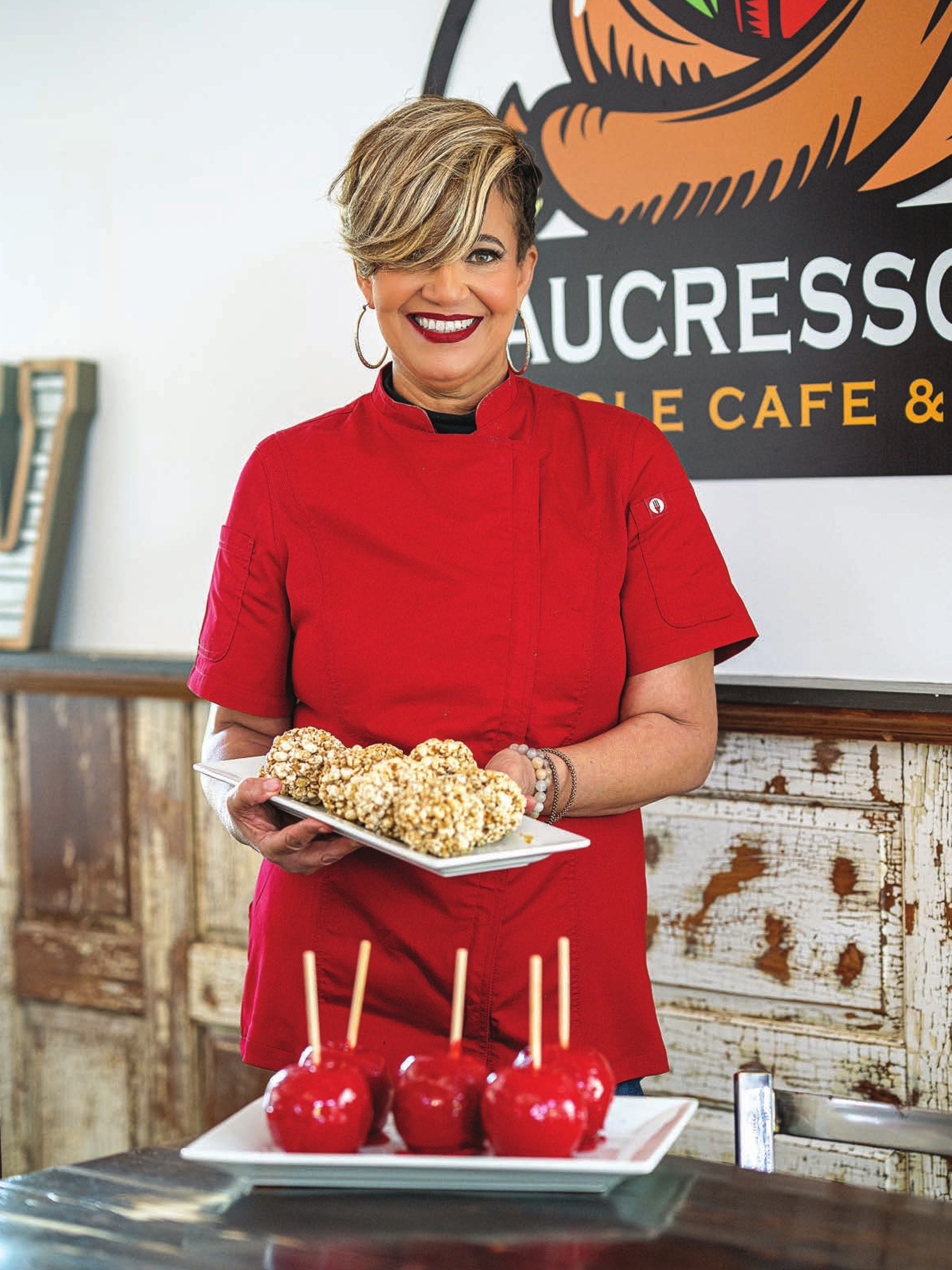
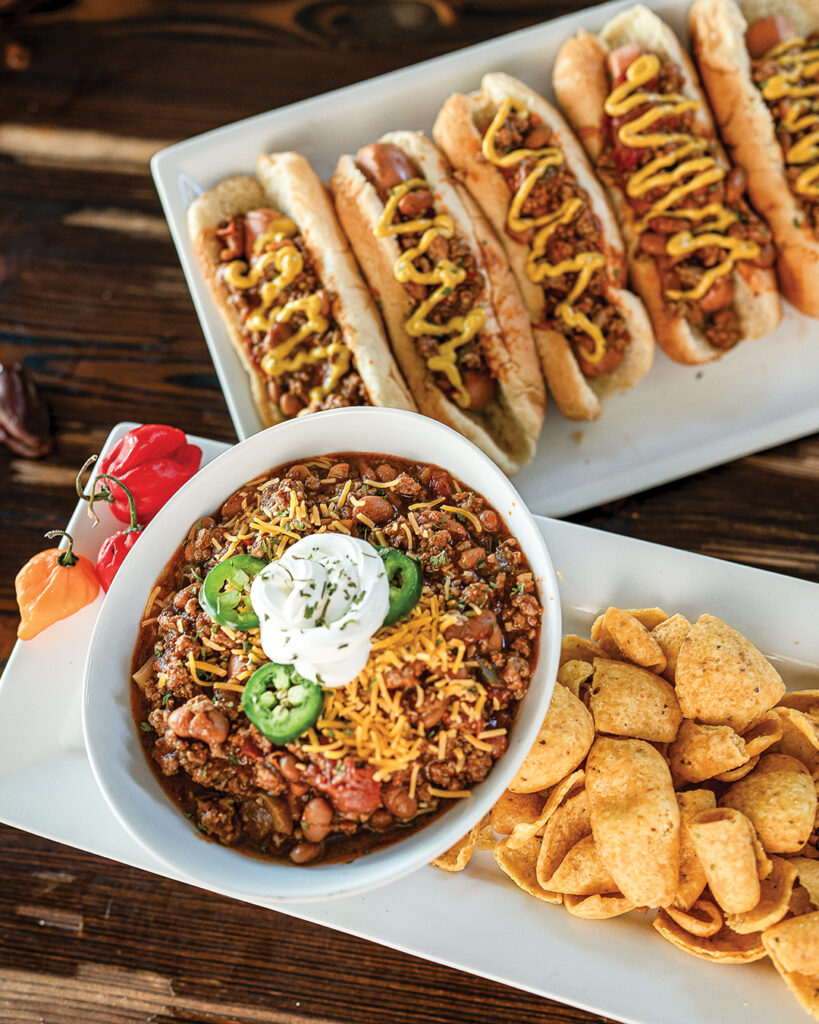
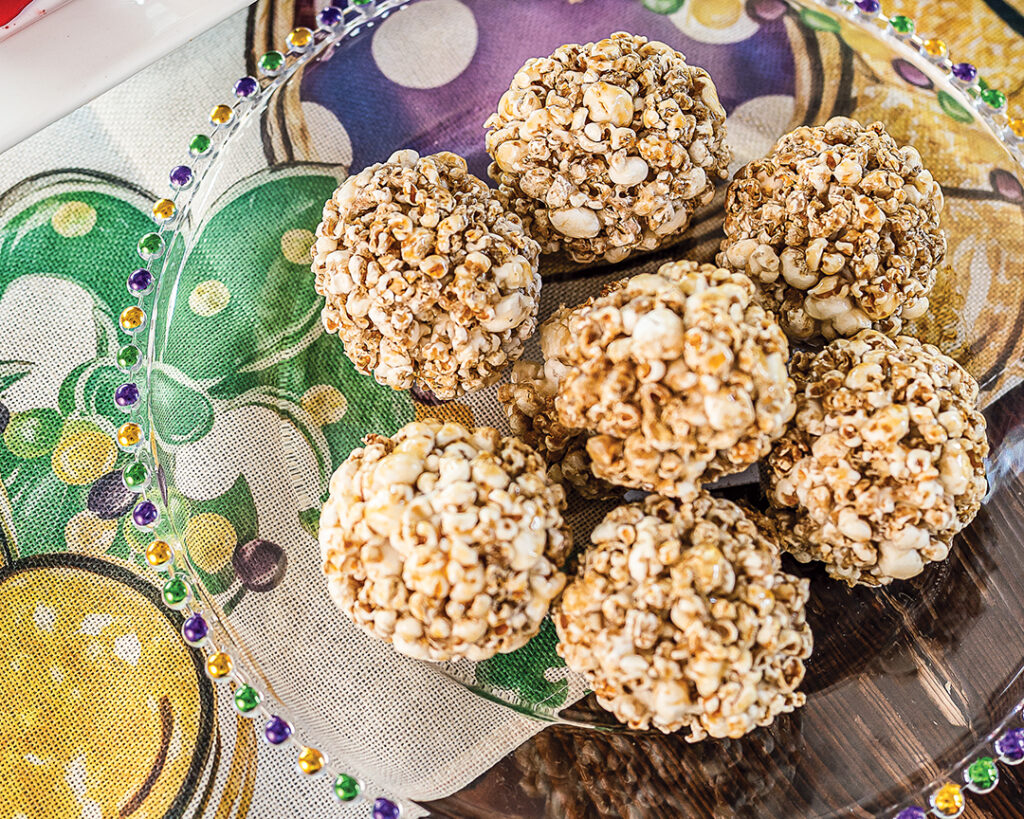
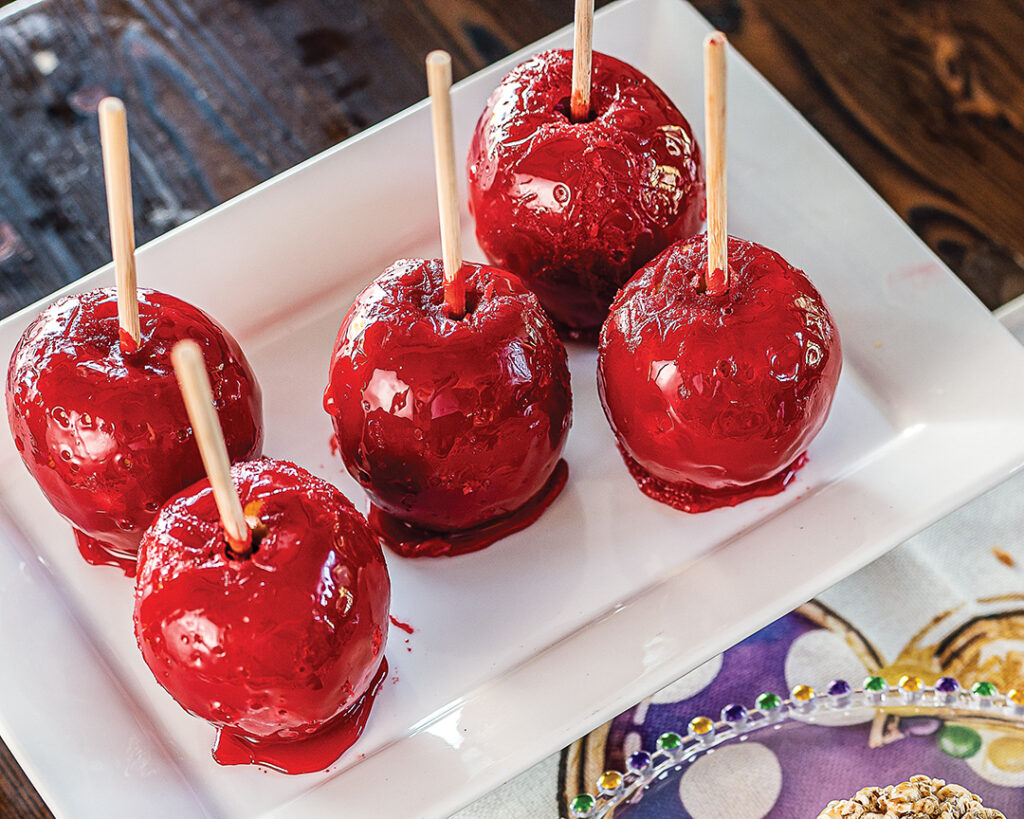
My mother was the ultimate hostess, with a classic style and effortlessness about her. She made everything look so easy. She would set up a table outside on the front porch decorated with beads, doubloons, and her signature green tablecloth. Bins would be brimming with bags of chips and ice chests overflowing with sodas for guests to snag. My mother’s menu never changed; we always had popcorn balls, candy apples, hot dogs, jambalaya, red beans and rice, and her famous homemade chili. As simple as those dishes were, they warmed both hearts and bellies.
Even today, these dishes are still favorites with Carnival revelers, not only because they are delicious and affordable but also because they hold well while waiting for the parade to end. You don’t see popcorn balls and candy apples at house parties much, but the street vendors still sell hundreds of them from their carts. Red beans and rice will always be a Carnival staple and is now served with Popeyes fried chicken, a modern classic.
Over the years, parades have moved out of the neighborhoods and are now on a centralized route. Parade riders even have signature throws now, many of which are collectible. And while the parade routes have changed and the food has evolved, the spirit of tradition has remained.
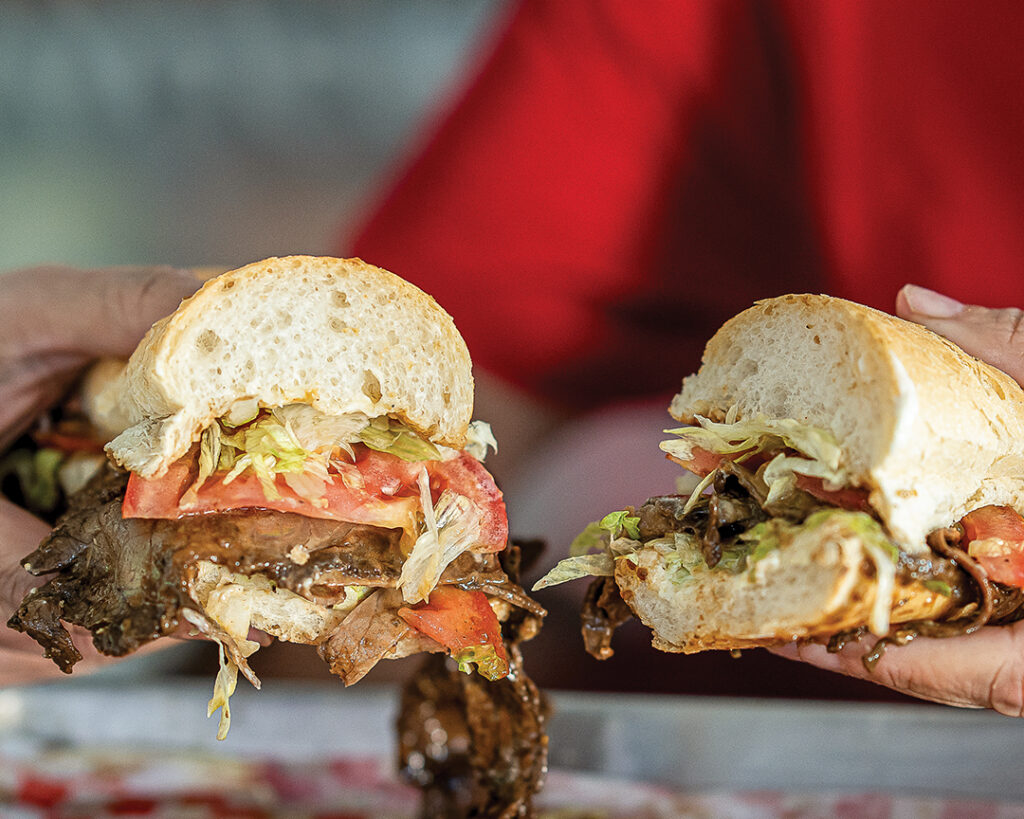
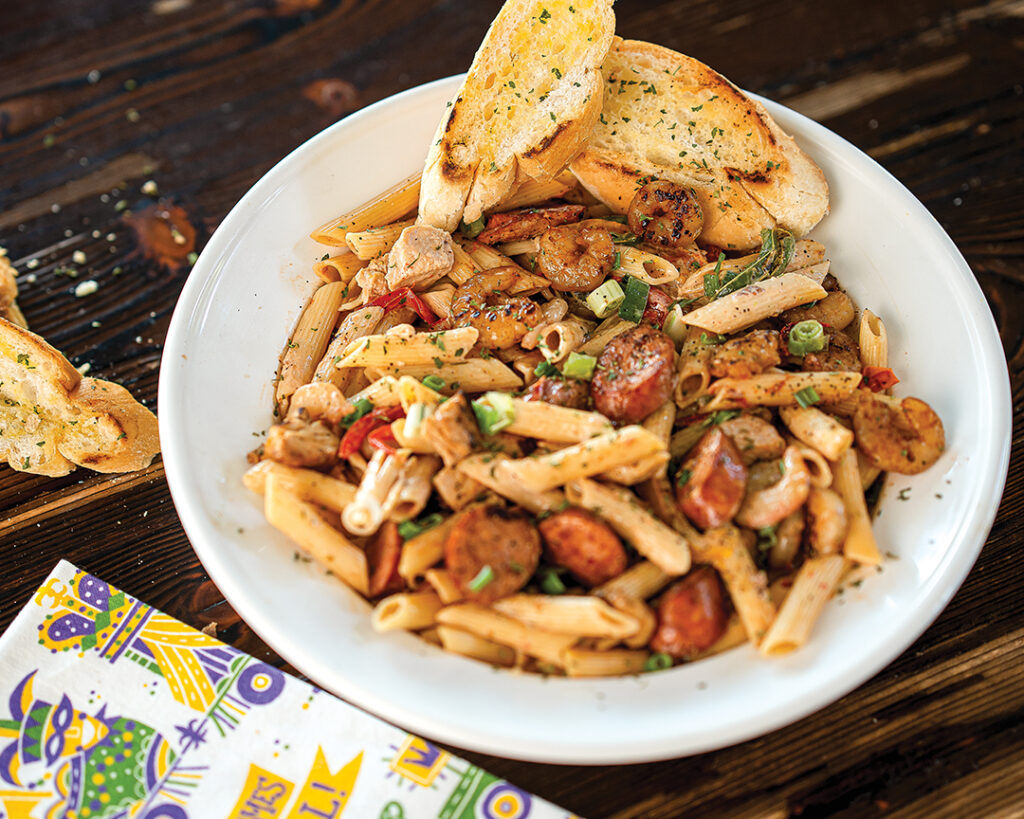
When I plan the Mardi Gras menu with my family, we continue the tradition by serving mostly the same menu but with a few updates. Instead of jambalaya, I serve pastalaya for a twist. I also serve roast beef po’ boys drenched in gravy because it’s easy to cook, the slow cooker makes it easy to serve and keep warm, and it will stick to your ribs. It’s just what’s needed when returning from a long day of parades, especially when it’s cold. Chili remains a must on the menu. It’s versatile and delicious, and not just to go along with the hot dogs. My chili bar setup includes crackers, cornbread, corn chips, and a variety of other toppings. It’s ideal for feeding a crowd.
Many families keep practicing these time-honored Mardi Gras traditions, old and new, year after year. They run so deep that even if people don’t go out to the parades, the flavors of the season still make their way into every kitchen. You’ll always find red beans filled with sausage and king cakes doused in a sugary glaze. For native New Orleanians, Mardi Gras has been and always will be more than a few weeks of parades and parties; it’s a representation of who we are. We wear the colors, we second line together, and yes, we always leave the knife in the king cake box. If you know, you know.
“Laissez bons temps rouler”—which means “Let the good times roll”—perfectly captures the essence of Mardi Gras, both literally and figuratively.

Love this article about Julie Vaucresson!