STORY AND RECIPE BY ALEXANDRIA BOWLER | PHOTOGRAPHY BY RANDY KRAUSE SCHMIDT
Working in restaurants can be incredibly challenging. Long hours are the norm, and it’s demanding, both mentally and physically. The requirements often prevent us from having relationships, children, and pets. We have to give up time with loved ones on holidays and regularly miss gatherings and vacations. Even hobbies can be hard to maintain.
If you ask a bartender what they most love about their job or why they do it, they might say the artistry, the flexibility, or the challenge—but most likely, you will hear about the deep connections formed with individuals over time and the personal reward of making people happy. While bartending, you can make someone’s day, week, month, or year. You can create a regular, a lifelong friend, or even meet your spouse.
I’m no exception to the people-pleasing personality type. In my 12 years of bartending, I’m still reminded why I endure the wear and tear every time someone tells me, “Wow, this is the best drink I’ve had in my life.” Even when it’s something simple like a Sazerac or an old-fashioned, I’m flattered, as I take great pride in doing simple things well.
The bar and the kitchen have a myriad of similarities—telling stories through flavors and presentations, developing menus, and expressing creativity, to name a few, but one thing I find that divides the kitchen and the bar is the human element. When a kitchen chef writes a menu, they aren’t able to have an in-depth conversation with the guest about what they do or don’t like, how they are feeling, or what mood they’re in. At the bar, these types of questions allow us to develop a beverage tailored to an individual rather than restricting orders to items available on the menu. These conversations often flow over into stories about life, love, loss, and often laughter. When these conversations are combined with quality ingredients, technique, and attention to detail, what develops is human connection in a glass.
I’m incredibly lucky to work in a space that has been pivotal in forming memories and bringing community together. Emeril’s has been open for 33 years, so it isn’t unusual to hear something like, “We got engaged at that table” or “We celebrated my milestone birthday here.” Recently, I had a couple of encounters that reminded me why restaurants are so important. Restaurants are supposed to be fun places to gather, celebrate, and be merry, but they can also be a place of mourning.
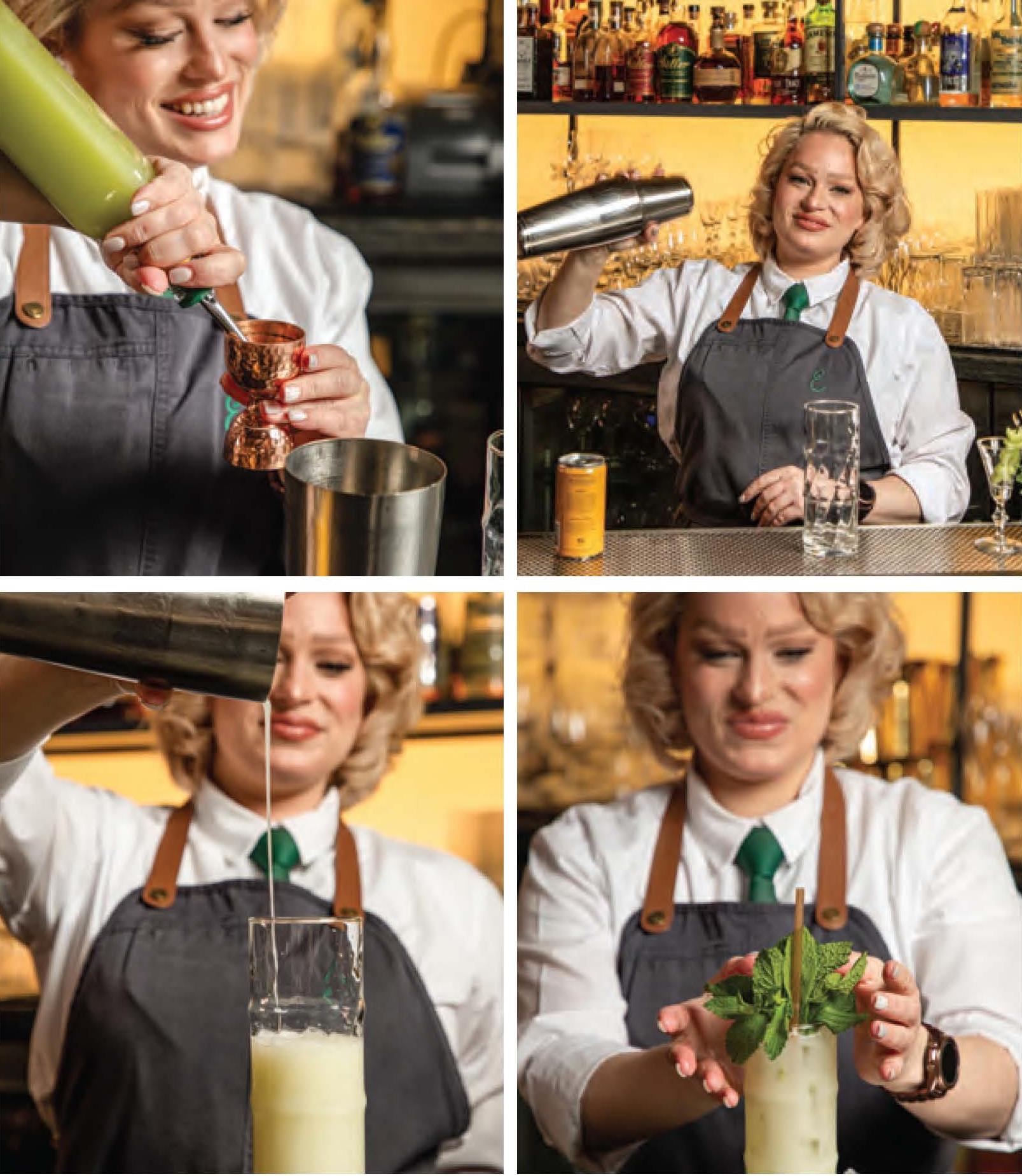
One such example includes when the wife of an upstairs neighbor was diagnosed with terminal cancer. The neighbor had come to sit at the bar to share the news with us and to gather his thoughts over a special Manhattan he is particularly fond of. He did this because of the bond we formed together with his wife over the years and because the restaurant had become an extension of their living room. We sent him home with flowers and well-wishes, but it wasn’t long before he had the somber news of his wife’s passing. He gathered his family and close friends at the bar, and we toasted to the memories of his late wife.
These types of encounters remind us of how it feels when somebody listens to you, sees you, and appreciates you for who you are—how it feels to taste things made with love. It reminds me of the root word of “restaurant,” meaning “to restore.” I’m privileged to do this for a living. The joy of what I do is evident in my work and that joy is contagious—it’s the buzz that welcomes people to the bar and invites them to stay for another or order a bite, even when they only came in for one drink.
Turnover rates in bars and restaurants are statistically high and average around 300%. People often take up restaurant work on the side while they finish school or pursue passion projects. Since the disruptions from the COVID-19 pandemic, the hospitality industry is still struggling to fill positions and return to full capacity or expand operating hours. This type of work is riddled with calamity and it’s certainly not for everyone—and maybe I’m in the honeymoon phase, but I still love it.
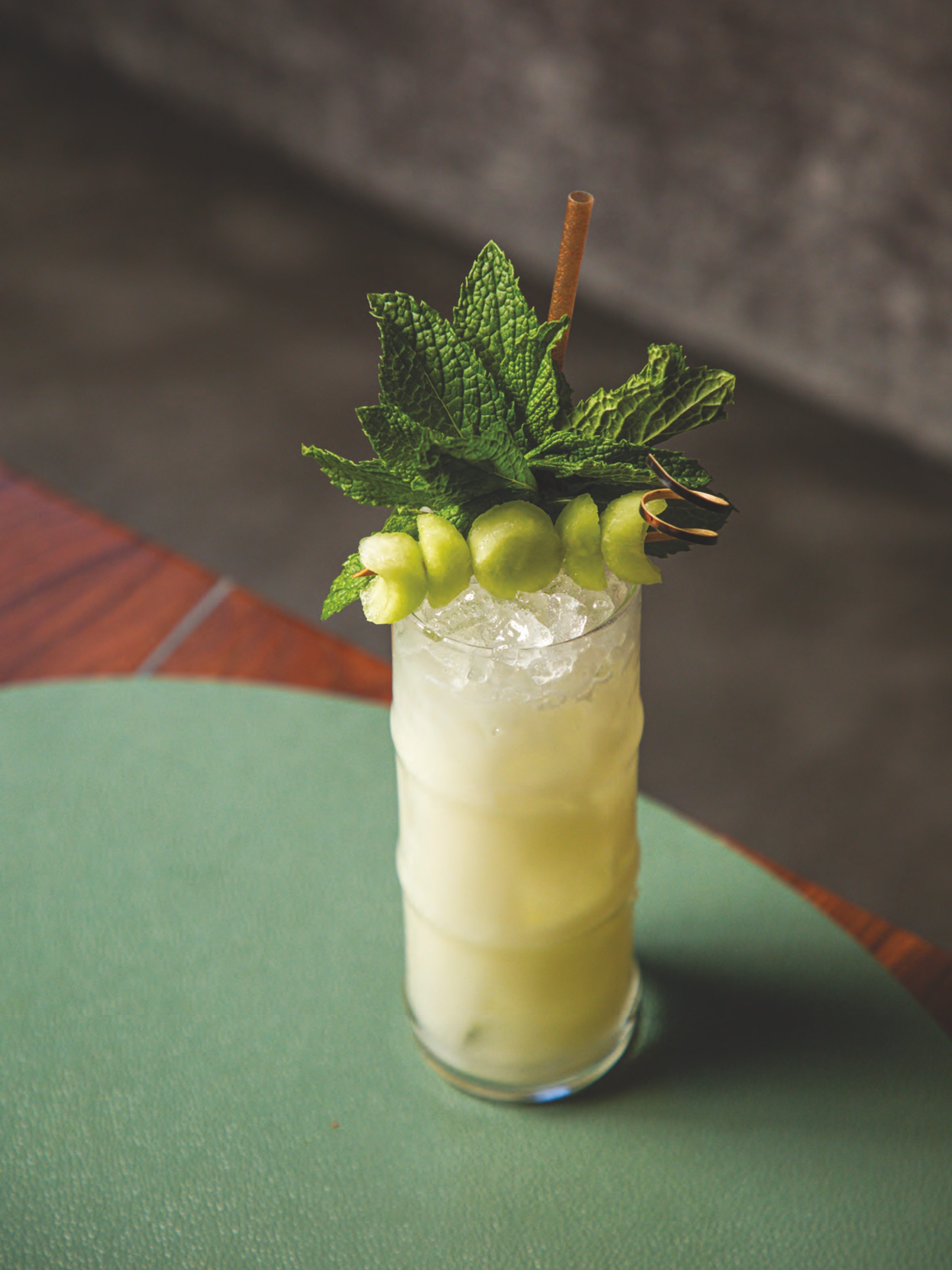
The Honeymoon Phase
Click on the image for the recipe!