Absinthe’s association with indulgent artists was a contributing factor to the banning of absinthe. Charles Baudelaire, Paul Verlaine, Arthur Rimbaud, Henri de Toulouse-Lautrec, Vincent van Gogh, Oscar Wilde, and Aleister Crowley were all infamous absinthe drinkers. These artists were known for their chaotic lifestyles; struggles with substance abuse, psychological problems, and promiscuity were all common for this erratic and emotional group. The sense of something unhinged and dangerous associated with these men began to bleed over to the reputation of what they consumed—namely absinthe.
Oscar Wilde is of en quoted in reference to the green elixir, and he was not the first or the last to exaggerate its psychotropic effects: “After the first glass, you see things as you wish they were. After the second, you see them as they are not. Finally, you see things as they really are, and that is the most horrible thing in the world… disassociated.”
Wilde speaks to this spirit affecting an entirely different kind of buzz. Science has proven that the wormwood in absinthe does not make you hallucinate. However, absinthe is a high-octane liquor with a potent blend of herbs, and I do believe that those factors are what make intoxication from absinthe different from drinking a glass of cognac.
This cocktail speaks to the deep connection between artists and absinthe, both in the Belle Époque era and in modern day. Van Gogh’s love affair with absinthe is a big part of his persona. It is rumored that not only did van Gogh enjoy absinthe to the extreme, but he also devoured the oils and turpentines used in his paintings. Absinthe was rumored to cause a drinker to see a yellow aura emanating from objects, which some say can be seen in paintings such as Starry Night. However, the odd lighting effects in van Gogh’s work are more of en attributed to epilepsy, a common diagnosis from scientists and historians who study van Gogh’s life.
The gin in this cocktail is a Dutch style (meaning aged), which is fitting because van Gogh was born in the Netherlands. The absinthe is French—a nod to the artist’s time in Paris, where he lived on several occasions. All spirits speak to van Gogh’s heritage and travels. The title is a reference to van Gogh’s famous cutting off of his ear and, of course, the trippy, drug-fueled themes of the contemporary adventures of Hunter S. Thompson, depicted in Fear and Loathing in Las Vegas.
Ear and Loathing
Ingredients
- 1 ounce Seven Three Distilling Gentilly Gin
- ¾ ounce Cocchi Americano
- ½ ounce St. George Absinthe Verte
- ½ ounce passion fruit purée
- ¼ ounce fresh lemon juice
- ¼ ounce simple syrup
- 3 dashes Peychaud’s Bitters
- 2 dashes saline solution*
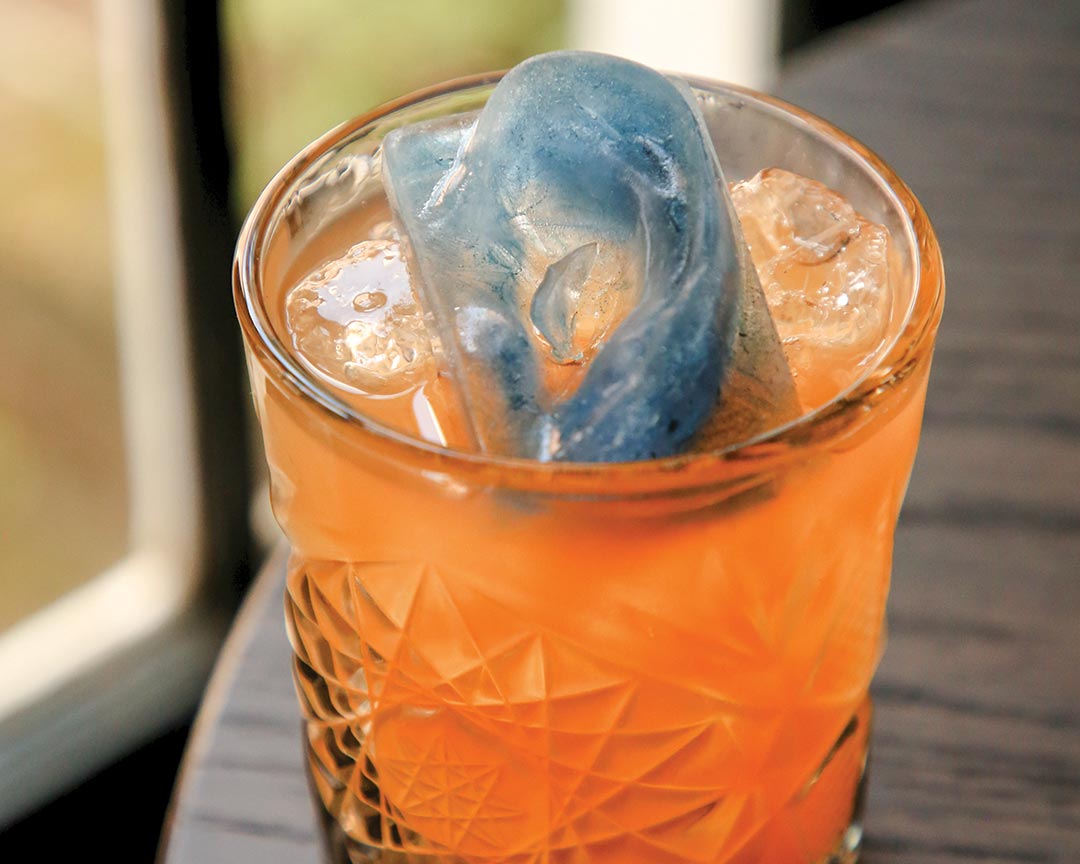
- Garnish: blue ice ear*
Instructions
- In a cocktail shaker, place gin, Cocchi Americano, absinthe, passion fruit purée, lemon juice, simple syrup, bitters, and saline. Add ice. Cover and shake until cold. Double strain into a rocks glass over fresh ice. Garnish with blue ice ear, if desired.
Notes
*To make saline solution, combine ¼ cup water and 2½ teaspoons salt. To make ice ears, add 1 tablespoon pea flowers to 8 ounces water. Soak flowers until water is fully saturated with indigo color, and freeze in ear-shaped ice molds.