The Coalition to Restore Coastal Louisiana knows how important it is to protect the state’s rapidly disappearing coastal wetlands, so the team is taking matters into its own hands, project by project. The organization’s efforts look to advocate, educate, and work collaboratively with policymakers, scientists, and local communities to address the climate challenges that threaten Louisiana’s coast and economy. Thanks to programs like the Oyster Shell Recycling Program, more than 17 million pounds of shell have been recycled and 10,000 feet of shoreline protected over the last decade. James Karst, CRCL’s director of communications, sat down with us to discuss this program and other lasting impacts the nonprofit has made.
What happens to the oyster shells after they‘re collected from a participating restaurant?
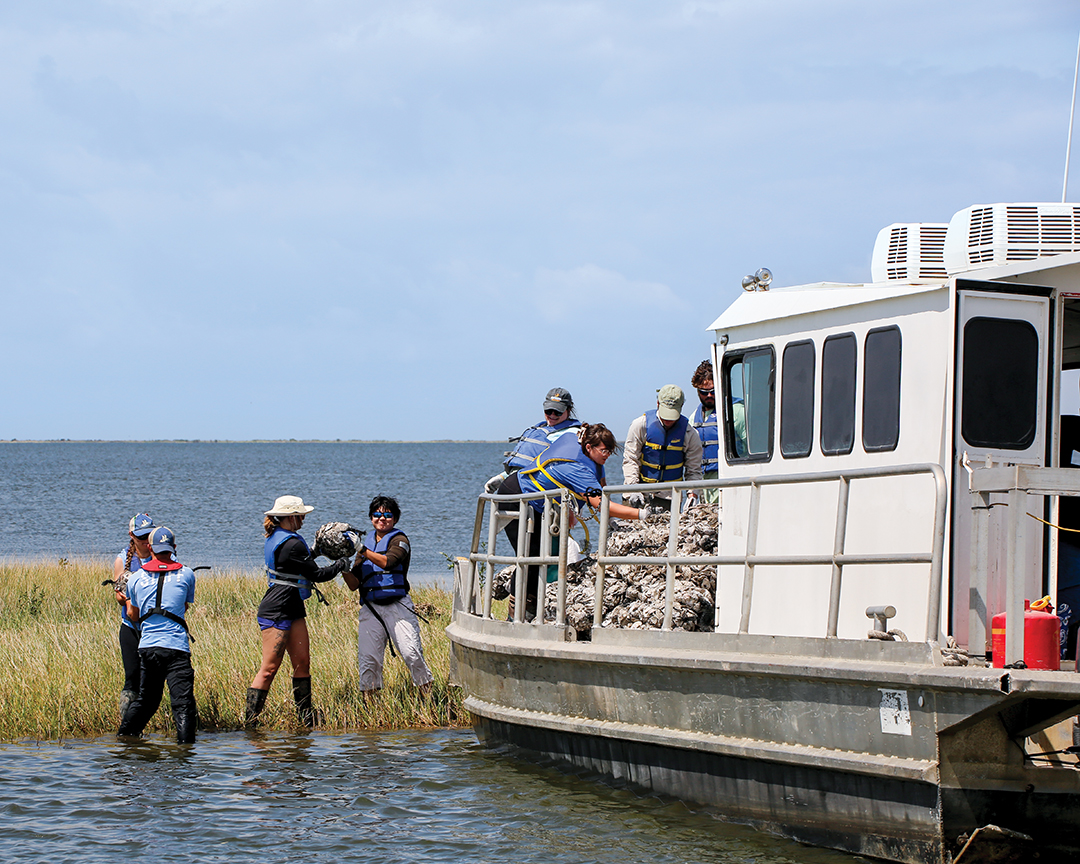
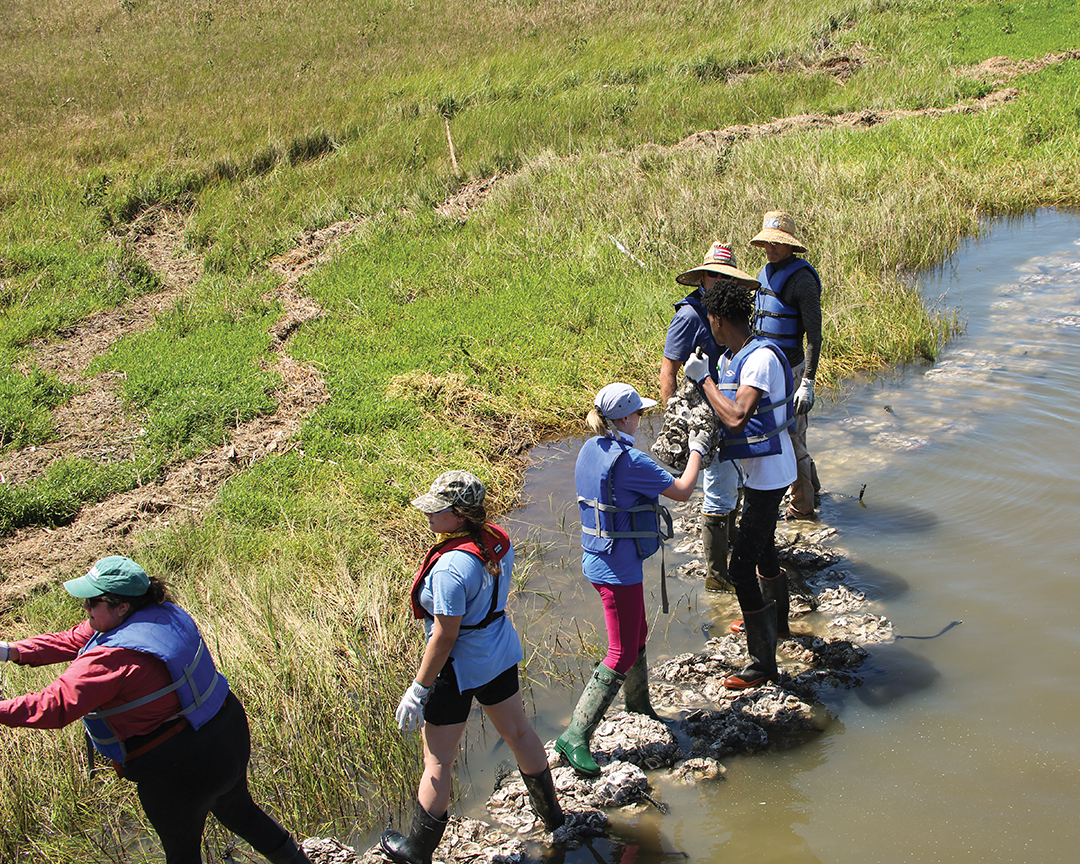
A contractor picks up oyster shells at restaurants several times a week. [. . .] They are driven to our Restoration Headquarters in Violet in St. Bernard Parish, and they are dumped onto a pile. [. . .] After a few months, you are left with clean, sun-bleached shells. Then, volunteers place them into marine-grade mesh bags and stack onto pallets. A couple times a year, those pallets get transferred to a staging site from which we launch our oyster reef builds. Volunteers stack these in the water, and they begin their new life as an oyster reef.
How do recycled oyster shells help create new oyster reefs?
Oyster shell is the preferred substrate for baby oysters. There are oyster larvae floating around in the water column, looking for something hard to grow on. When we build an oyster reef, within weeks or months, baby oysters begin to attach to the old shell and begin to grow. This is why our oyster reefs are considered living shorelines—they are alive! When the sea level rises, the oyster reef, since it has oysters growing on it, will grow vertically as well. The reefs we build are not intended to become productive. We design and build them specifically to slow the rate of erosion; they are not harvestable. That said, they indirectly support the oyster industry by creating more habitat, therefore more harvestable oysters on oyster leases nearby.
How have Louisiana chefs/restaurant owners stayed involved?
Our chefs and restaurateurs are wonderful—they are a crucial part of this operation. They are all knowledgeable about coastal land loss and the importance of Louisiana’s seafood industry. [. . .] Numerous chefs have given great media interviews about the shell recycling program.
Tell us about your native plant and marsh restoration efforts. How does a healthy marsh habitat support marine life?
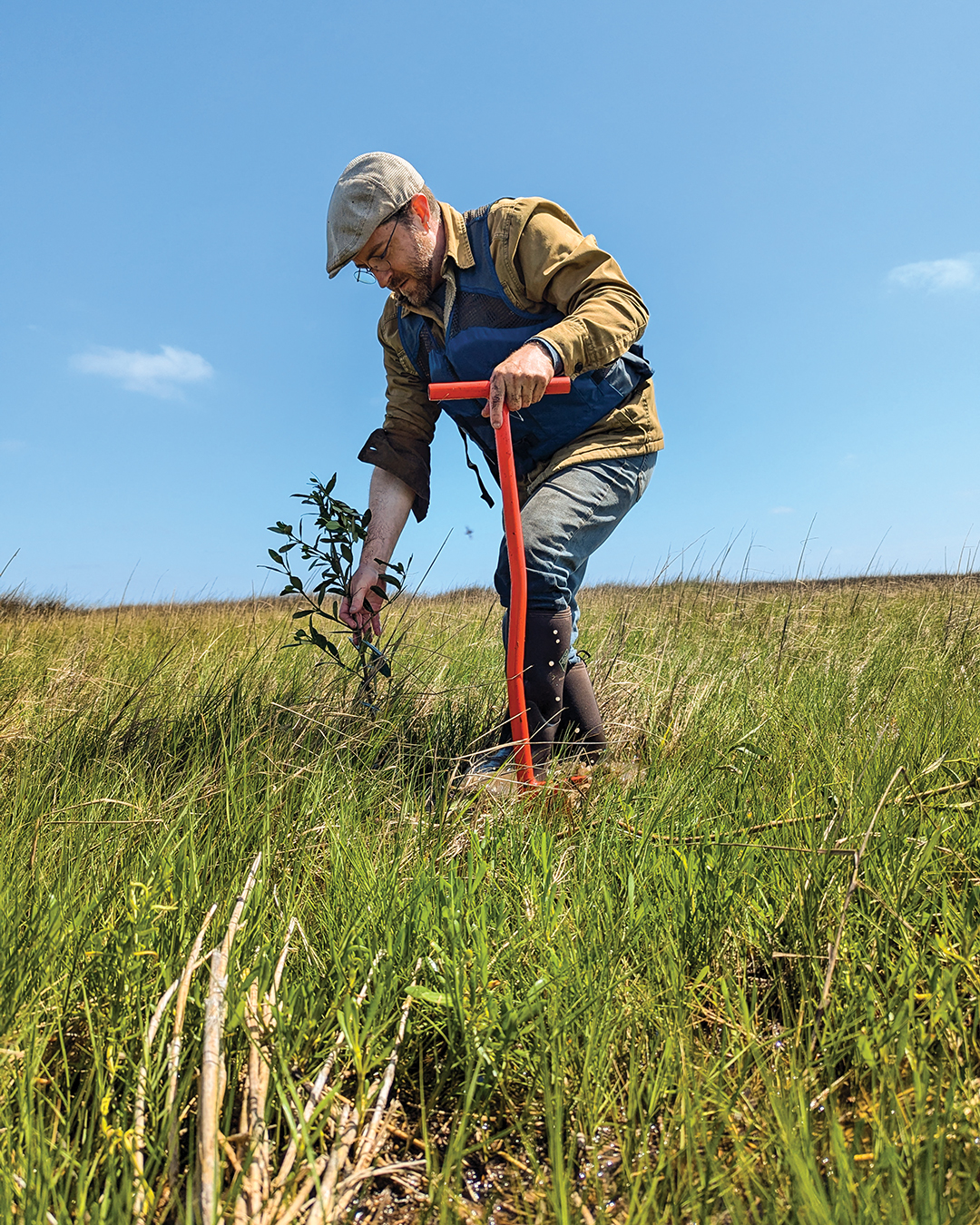
With our horde of volunteers, we have planted more than 1 million plants and trees across Louisiana’s coast, from Cameron Parish to St. Bernard. With some partner organizations, for instance, we are planting more than 30,000 bald cypress trees in the Central Wetlands in New Orleans and St. Bernard over the course of four years. These volunteer events are fun and engaging. Healthy habitat is productive habitat. Our wetlands are the nursery of shrimp and crabs and other fish. To have a healthy seafood industry, we need healthy wetlands.
How closely do coastal restoration and preserving the state’s culinary heritage go hand in hand?
To my mind, it is inexorably tied! When you think of Louisiana’s culinary heritage, you’re thinking of our bountiful seafood industry. We are not trying to protect our coast just for the people who live there; it’s also to preserve our culture and our seafood.
Follow its efforts on Instagram at @crcl1988 and at crcl.org.
Have an organization that’s doing good in Louisiana and deserves a spotlight? Let us know by contacting us online. Help us do our part to shed light on these amazing organizations and the incredible work they do. @louisianacookin