One of the oldest cultivated crops, these beans have deep roots back to Sicilian immigrants and the Mediterranean before that. Always one to make an appearance on St. Joseph’s Day, these “blessed beans” or “lucky beans” are considered a symbol of good fortune, prosperity, and protection. Make sure to grab some fresh ones while you can—the season is short—to add a vibrant pop of green to your springtime dishes, or you can always make use of the canned variety in a pinch.
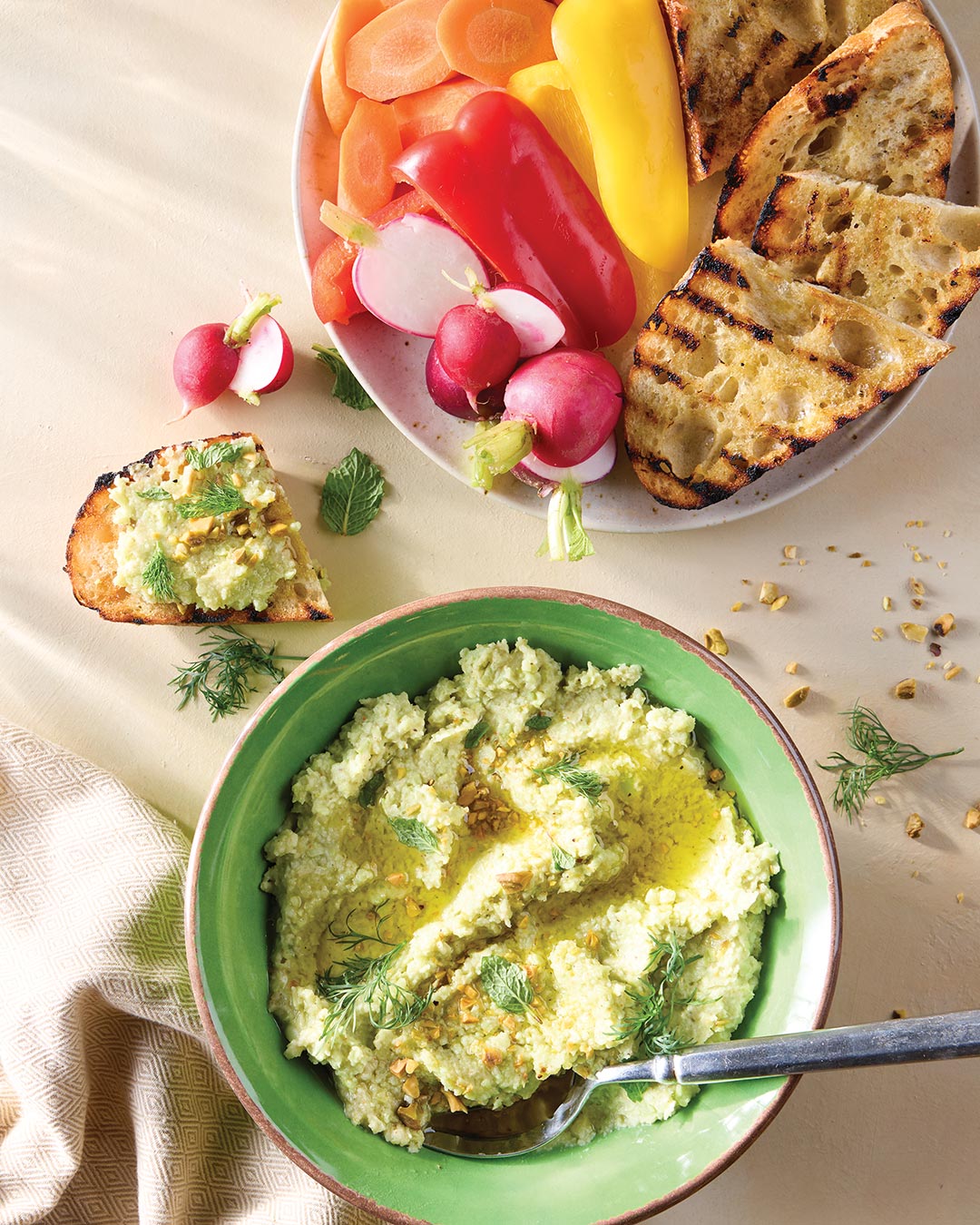
Whipped Fresh Fava Bean Dip
Makes 4 servings
Ingredients
- 4 cups plus 1 tablespoon water, divided
- 2 cups shelled fava beans*
- 2 tablespoons olive oil
- 1 teaspoon lemon zest
- 1½ tablespoons fresh lemon juice
- 1 clove garlic, minced
- ¾ teaspoon kosher salt
- ¼ teaspoon ground black pepper
- ⅛ teaspoon cayenne pepper
- 2 teaspoons chopped fresh dill
- 2 teaspoons chopped fresh mint
- Grilled bread and crudités, to serve
- Garnish: fresh dill, fresh mint, chopped roasted salted pistachios, olive oil
Instructions
- In a medium stockpot, bring 4 cups water to a boil over medium-high heat; add beans. Return to a boil, and cook until outer skin starts to loosen and beans float to the top, 2 to 3 minutes; drain. Immediately transfer beans to an ice water bath to stop the cooking process; drain. Once cool enough to handle, using your thumbnail or the tip of a paring knife, make a small slit in pale, waxy outer skin (sheath) of each bean; gently squeeze bean to pop out bright green interior. Discard outer skins.
- In the work bowl of a food processor, pulse beans, oil, lemon zest and juice, garlic, salt, and peppers until smooth, stopping to scrape sides of bowl. Add remaining 1 tablespoon water, if needed, to reach desired texture. Stir in dill and mint. Spoon into a serving bowl. Serve with bread and crudités. Garnish with dill, mint, pistachios, and oil, if desired.
*One pound of fava pods yields about 1 cup shelled beans.
Kitchen Tip: Preparing fava beans to be cooked is a two-step process of shelling and peeling to reach the tender, bright green inner bean. They can be eaten raw or quickly cooked to enhance their mild, sweet flavor.