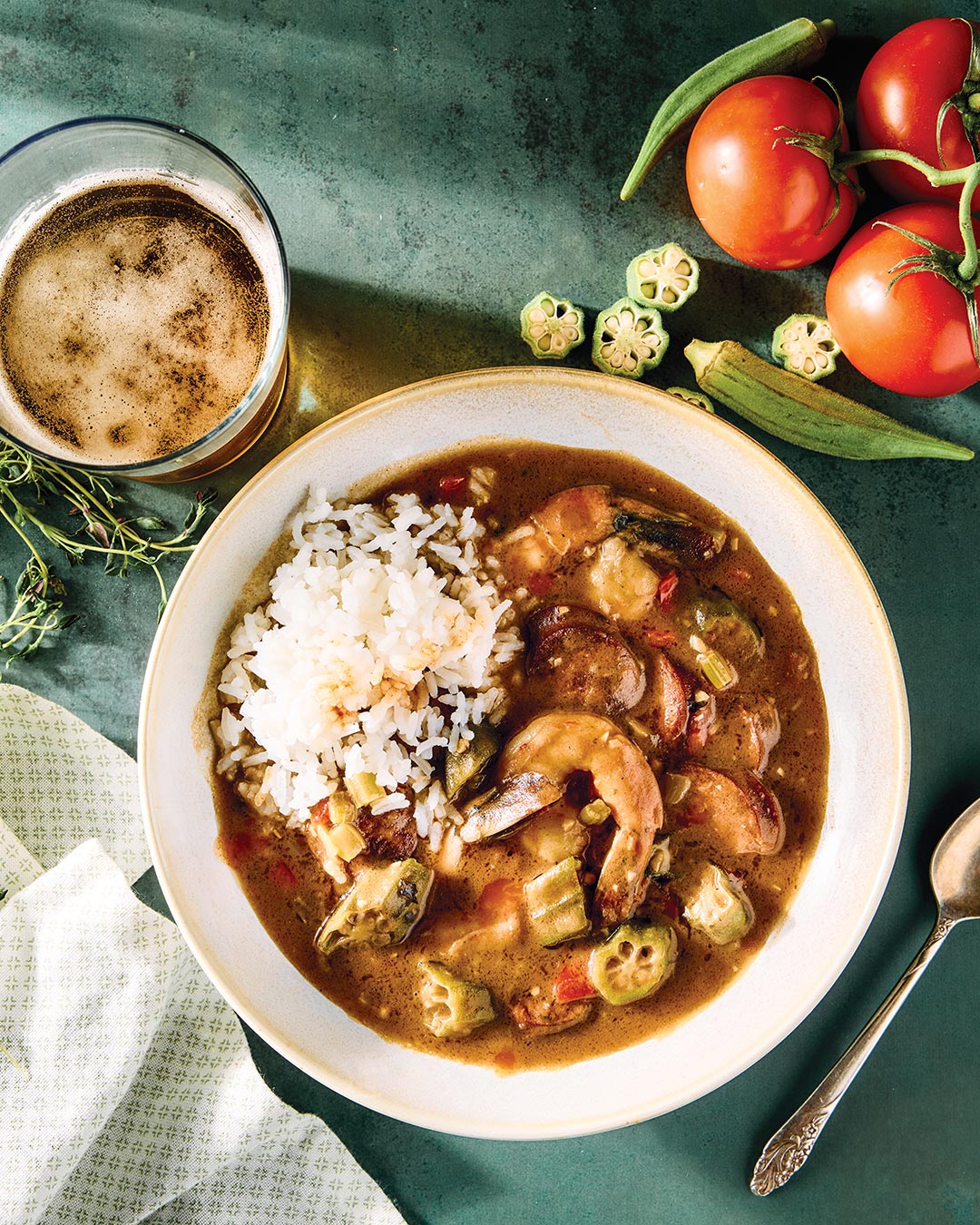
This Shrimp, Andouille, and Okra Gumbo features smoky andouille sausage, tender shrimp, and fresh okra simmered in a rich, dark roux for a classic Louisiana favorite.
Shrimp, Andouille, and Okra Gumbo
Makes about 10 servings
Ingredients
- 1 pound andouille sausage, sliced crosswise
- ¾ cup vegetable oil
- 1 cup all-purpose flour
- 1 cup chopped yellow onion
- ¾ cup chopped red bell pepper
- ¾ cup chopped celery
- 6 cloves garlic, minced
- 5½ cups chicken stock, warmed (see Note)
- 1 (14.5-ounce) can fire-roasted diced tomatoes
- 1 teaspoon chopped fresh thyme
- 2 dried bay leaves
- 3 cups fresh okra pods, cut crosswise into ½-inch pieces
- 1 pound peeled and deveined large fresh shrimp (tails left on)
- 1 teaspoon kosher salt
- 1 teaspoon Creole seasoning
- ½ teaspoon ground black pepper
- Hot cooked rice and hot sauce, to serve
- Garnish: chopped green onion
Instructions
- In a medium cast-iron Dutch oven, cook andouille over medium heat, stirring frequently, until lightly browned, 8 to 10 minutes. Remove using a slotted spoon, and let drain on paper towels, reserving drippings in pot.
- Reduce heat to low, and add oil to pot. Sprinkle flour on top, and whisk until combined. Cook, stirring constantly, until roux turns a dark brown color, about 30 minutes.
- Add yellow onion, bell pepper, and celery to roux; cook, stirring constantly, until softened, 3 to 5 minutes. Add garlic; cook, stirring constantly, for 1 minute. Gradually whisk in warm stock. Add tomatoes, thyme, and bay leaves; bring to a boil. Add andouille; reduce heat to medium-low, partially cover, and simmer, stirring frequently, until thickened, about 50 minutes.
- Add okra to andouille mixture, and cook, stirring occasionally, until tender, about 20 minutes.
- Stir in shrimp, salt, Creole seasoning, and black pepper; cook until shrimp are pink and firm, 3 to 5 minutes. Discard bay leaves. Serve with hot cooked rice and hot sauce. Garnish with green onion, if desired.
Notes
Note: Adding cold stock to a roux can break it, leading to a curdled appearance. The clumps of flour will eventually melt back into the gumbo, but it’s best to avoid it in the first place.