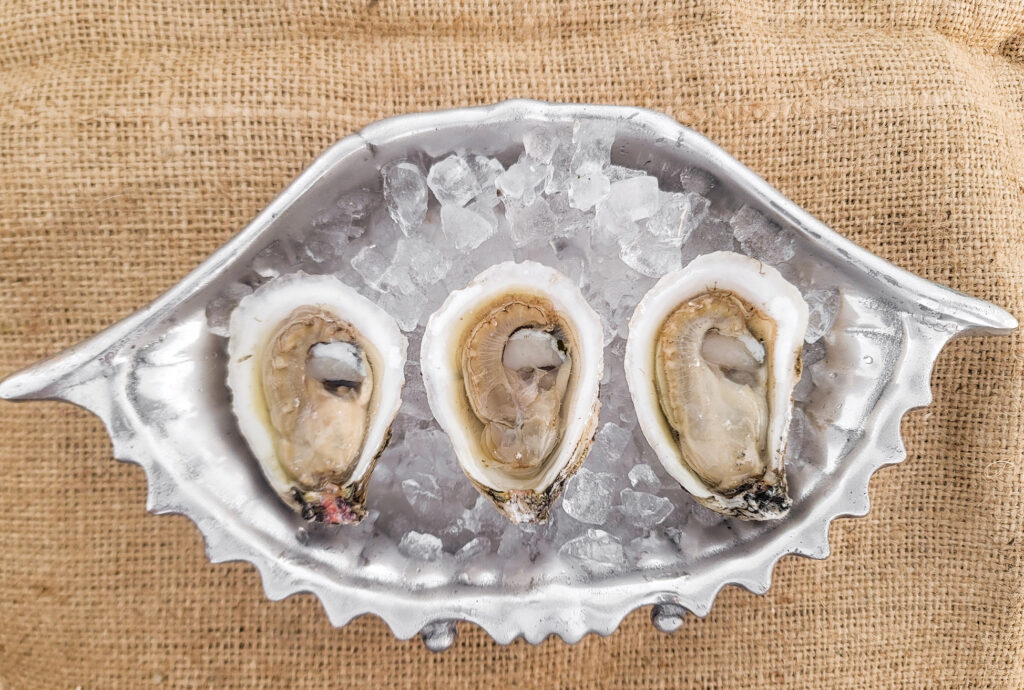
Each winter, when temperatures dropped and wild oysters were ready to be harvested, Jason Pitre’s late grandfather Antoine “Whitney” Dardar would venture into oyster-rich ponds and canals off the coast of Lafourche Parish in a pirogue and rake up the bivalves, breaking them apart by hand. It was how he’d done it for decades and how he’d seen his own father do it before him. “He was a traditionalist,” says Jason, proprietor of Bayou Rosa Oyster Farm in Leeville. But as his grandfather got older and environmental concerns emerged, traditionalism wasn’t cutting it. The ponds and canals where he’d fished for oysters were now lakes and 5-to-10-foot bodies of water, and the BP oil spill was a final straw. “The oysters were just not there anymore, and there was the question of whether they were safe to eat. Those two factors were really discouraging,” says Jason.
On a travel nursing assignment in California, a coworker took Jason, who is a licensed nurse, to an oyster farm and Jason immediately thought of his grandfather back in Louisiana. “I thought, ‘Man, this could help my grandfather out a lot if we could incorporate some of those methods here,’” says Jason, who grew up oystering and fishing alongside his grandfather. Those farmed oysters came from a hatchery and were grown in cages rather than on reefs, giving oyster producers more control over their cultivation. Officials in Louisiana had recently passed legislation to allow for more nuanced oystering approaches. So, in 2018, the family began to trade in dredging and tonging for farming, marking a new era in their oyster legacy. “I thought it was really important to try to keep this tradition and heritage alive,” Jason says.
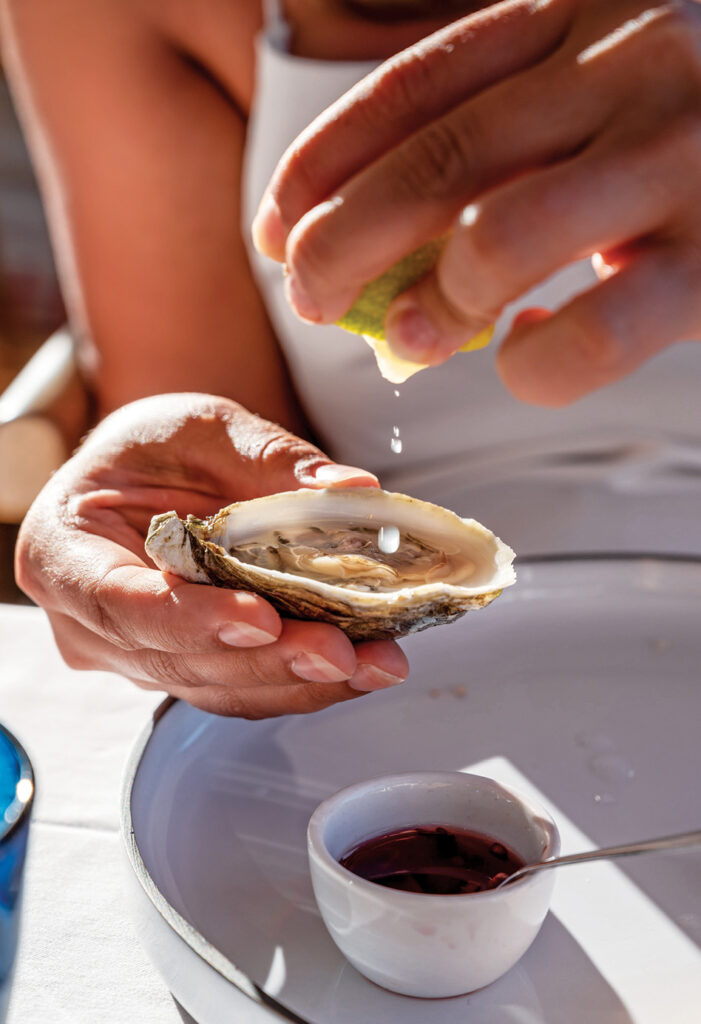 On his late grandfather’s leases, Jason and the team at Bayou Rosa Oyster Farm worked for years to get it just right. Now, they successfully produce oysters that aren’t too salty or too sweet, are perfectly sized by restaurant standards, and boast a cleaner shell. They do so by closely monitoring the oysters and moving their enclosures among the water column or to different leases, whether further inland for more sweetness or closer to the Gulf for a saltier taste. Jason’s grandfather passed away before Bayou Rosa Oyster Farm’s oysters hit the market last year, yet Jason says his grandfather helped all along the way.
Cultivated oystering has grown substantially in recent years, especially on the East and West Coasts. It’s a relatively newer concept in the Bayou State, but Jason believes it will continue to grow as environmental factors weigh on wild oyster populations. “I think they [wild-grown oysters] will always be a part of oysters in Louisiana because it has been successful for so many years,” says Jason. “But as numbers decrease, cultivated oysters will have to fill that gap.”
Find out more at bayourosaoysters.com.