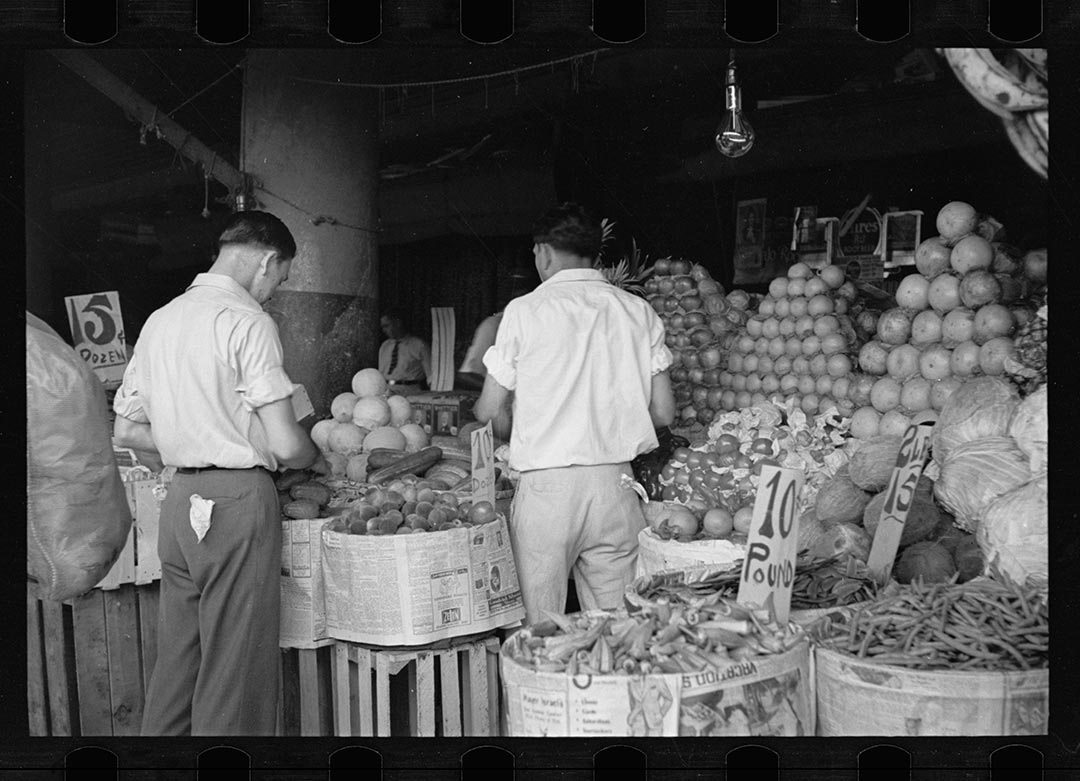
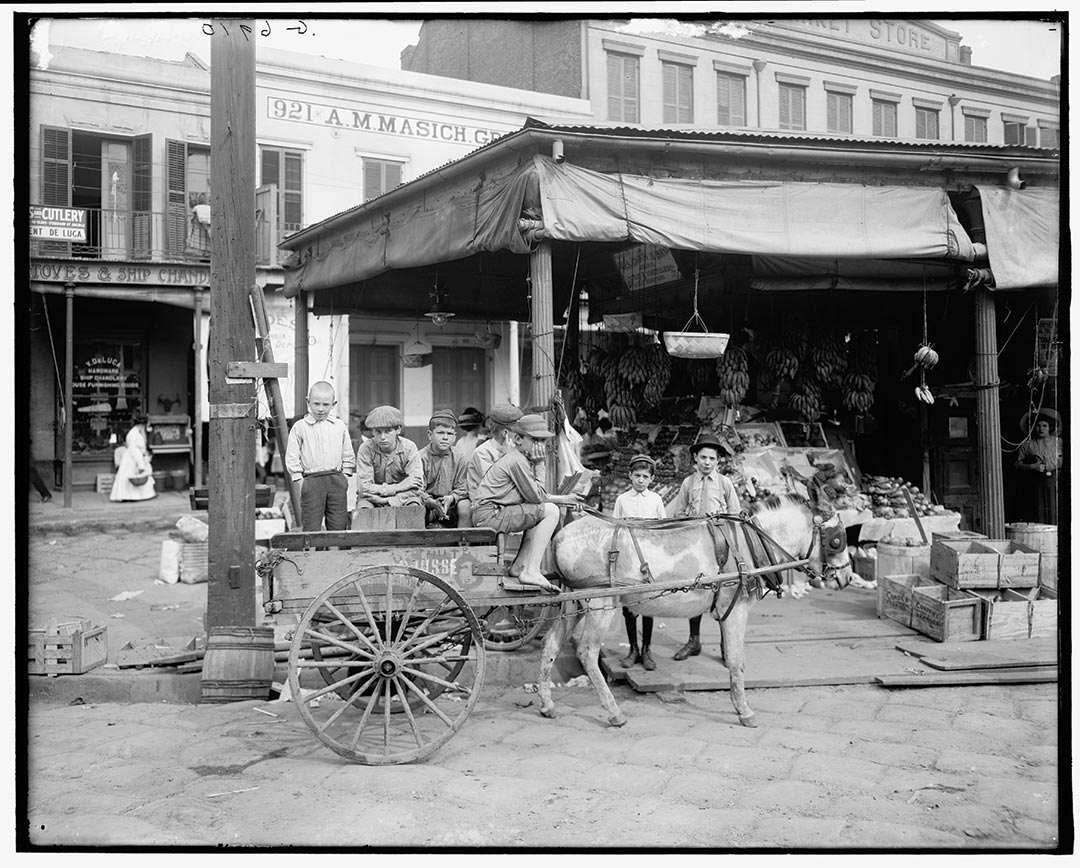
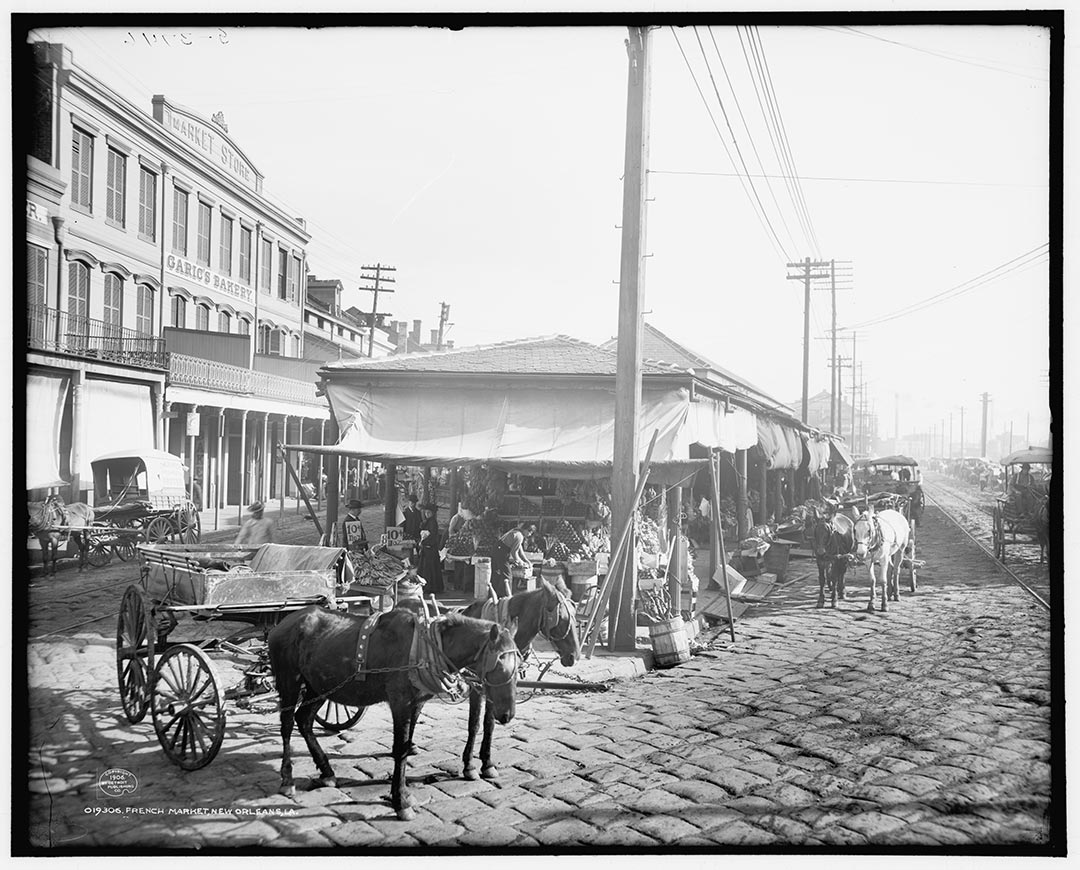
 The French Market has come to be one of New Orleans’ most popular tourist destinations, but at one time, it was the center of a system of more than 30 public markets throughout the city. Public markets once played an essential role in the daily lives of New Orleanians, who would purchase their groceries at neighborhood markets, but with the advent of grocery stores, most of the city’s public markets disappeared.
Before the Spanish colonial government of New Orleans formally established the French Market in 1791, it was the site of a Native American trading post and later an informal marketplace where vendors sold food from stalls or carts. The Spanish intended the market to be a place where vendors could sell their goods under one roof, which allowed for easier regulation and quality control. People and goods from all over the world made their way to the city and the market.
In Impressions Respecting New Orleans, Benjamin Henry Latrobe’s diary from 1818 to 1820, he recounts, “Along the levee, as far as the eye could reach to the West and to the market house to the East were ranged two rows of market people, some having stalls or tables with a tilt or awning of canvas, or a parcel of Palmetto leaves. The articles to be sold were not more various than the sellers … I cannot suppose that my eye took in less than 500 sellers and buyers, all of whom appeared to strain their voices, to exceed each other in loudness … ”
 As New Orleans’ economy boomed in the early 19th century, the city built more markets outside of the French Quarter. Neighborhood markets sprang up around the city, and the goods that were available varied based on demographics. Vendors offered goods that reflected the traditions and cultures of communities in those neighborhoods. Additionally, geography factored in to the availability of goods like seafood, which was more prevalent at markets closer in proximity to Lake Pontchartrain.
At the height of New Orleans’ public market system there were nearly three-dozen neighborhood markets. Markets continued to be vital community centers until the mid-20th century, but many had not been well maintained, and with the help of the Works Progress Administration, renovations were made to the city’s markets in the 1930s. Yet by the end of World War II, public markets faced a dramatic decline due to the convenience of grocery stores and a shift in Americans’ eating habits. Consumers began to prefer processed, prepackaged food as opposed to the fresh food they had been purchasing from the markets.
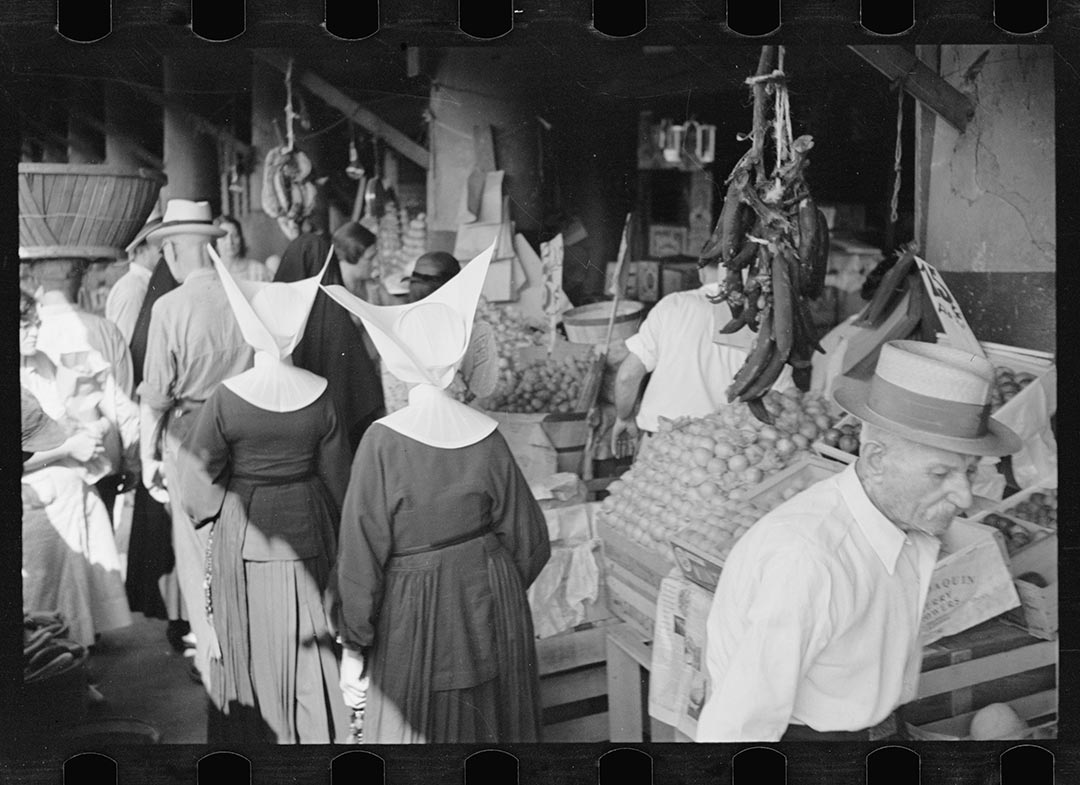 Today, the French Market is the country’s oldest public market and has become a popular attraction for locals and tourists alike. Early structures destroyed by fire and hurricanes were replaced with one built in 1813 on the site where Café Du Monde now sits. In earlier days, it was known as the Halle des Boucheries (or meat market).
Other markets around the city have been revitalized or repurposed in recent years. The building that was once the Dryades Street Market is now home to the Southern Food & Beverage Museum. The St. Roch Market, which opened in 1875 on St. Claude Avenue, was virtually destroyed after Hurricane Katrina. After an extensive renovation, it reopened in 2015 as an eclectic food hall.
While our culinary preferences have changed with modernization, public markets are an intricate part of New Orleans’ history and food culture. From the time of the city’s founding 300 years ago, the Crescent City has been home to public markets where people from all over the world exchanged goods. If the enduring popularity of the French Market and revitalization of other markets are any indication, the legacy of public markets in New Orleans will live on for years to come.