The French and Spanish influence on Louisiana’s culture and cuisine is evident, but what many don’t realize is that German settlers also made significant contributions to those aspects of the state’s traditions. In the early part of the 18th century, Germans settled along the Mississippi River in southern Louisiana, about 20 miles upriver from New Orleans in what are now known as St. Charles and St. John the Baptist Parishes. This area became known as Côte des Allemands, or the German Coast.
Beginning in the 1720s, families from the Rhineland area of Germany came to the Louisiana colony in the hope of finding a better life, encouraged by propaganda from John Law, a notable Scottish economist and director of the Company of the Indies, which was granted a trade monopoly in the territory for 25 years. In pamphlets distributed in Germany, he described Louisiana as a place with great soil that could raise four crops a year and land “filled with gold, silver, copper, and lead mines.”
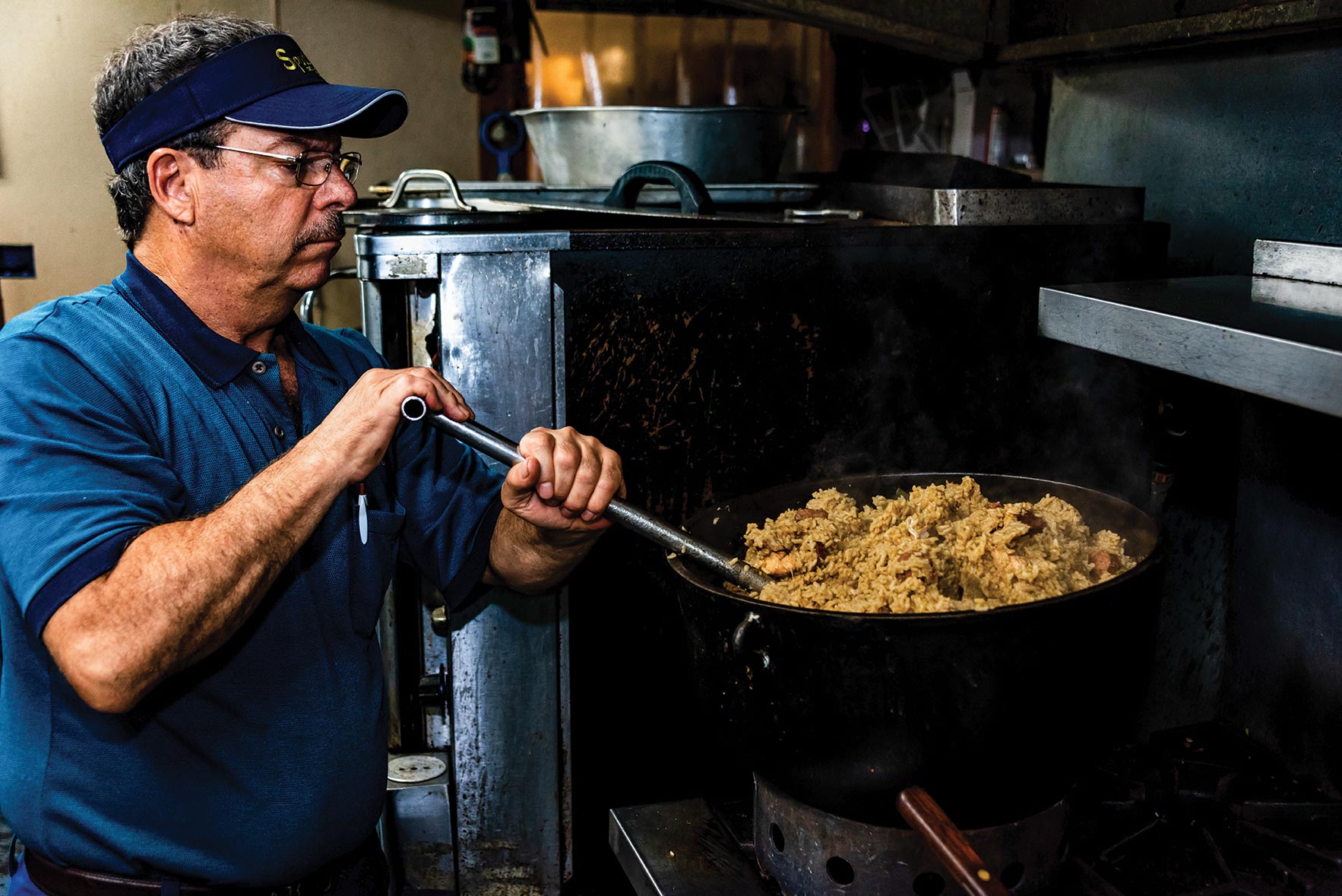 Around 10,000 Germans chose to immigrate to Louisiana, but fewer than 2,000 completed the journey. Those early settlers soon proved to have expert farming skills. They provided rice, vegetables, and other cash crops to the New Orleans markets and, more than once, saved the city from famine. The farming tradition is carried on today by descendants of those settlers.
As the Germans and Acadians began to intermarry, French culture and language became dominant on the German Coast. In fact, since French was the language of the time, many Cajun surnames popular today originated as German names but took on new spellings when recorded for the census.
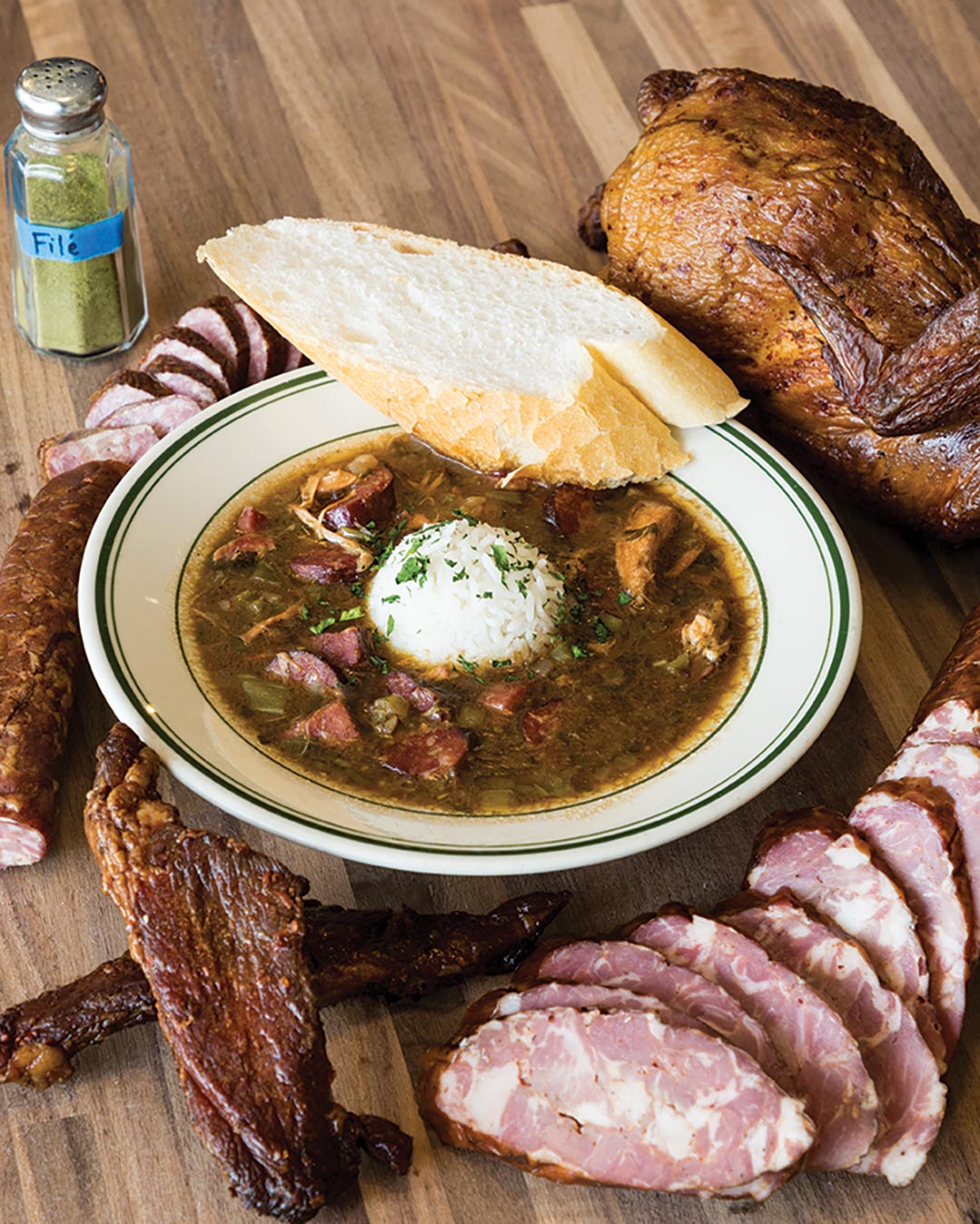
However, the German contribution to the area’s foodways is still evident today. Andouille may have a French name, but this mainstay of Cajun and Creole cuisine was heavily influenced by German butchering and sausage-making traditions. The German communities held boucheries, during which a pig was slaughtered and every part was used to make all manner of pork products, including andouille and other sausages.
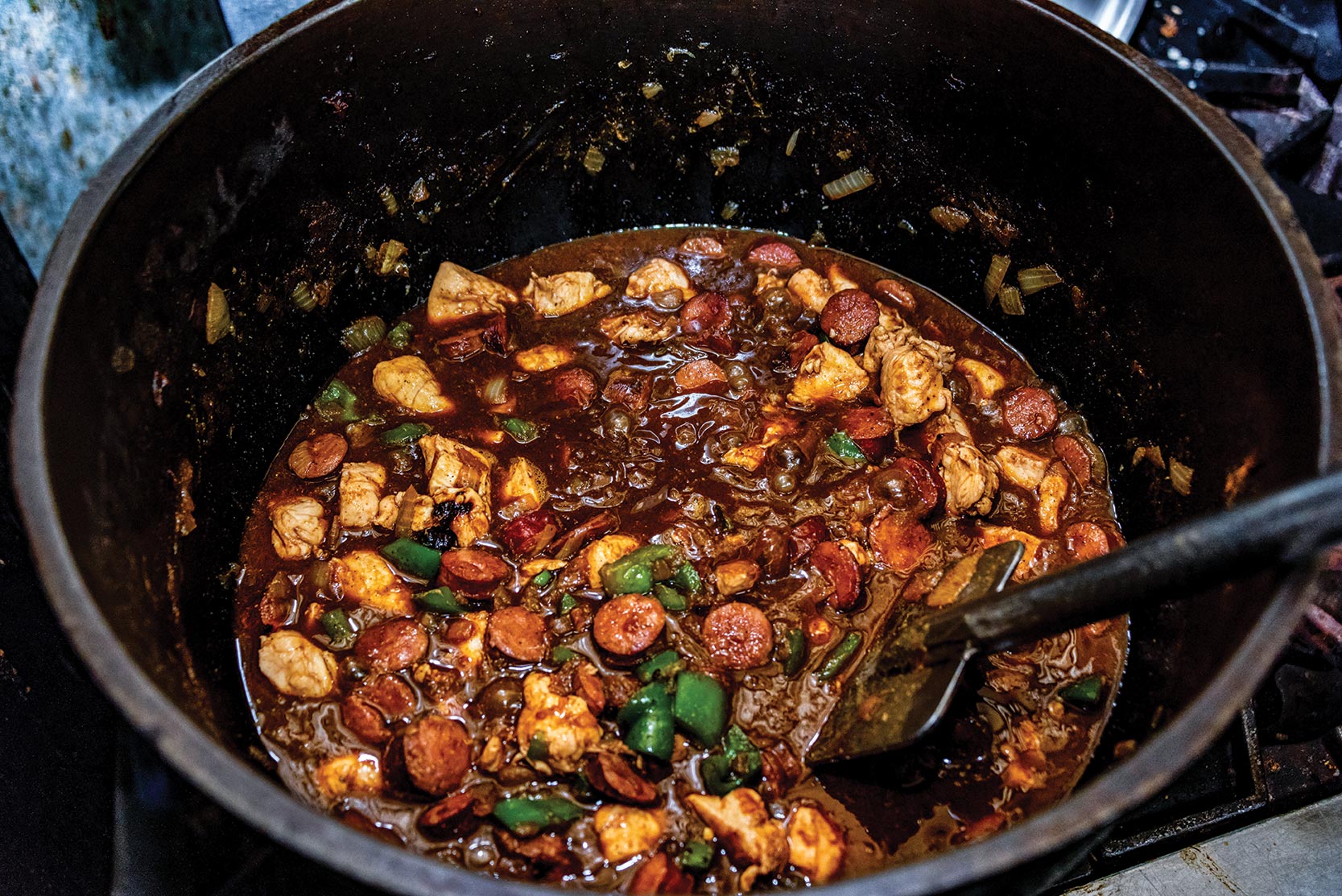 The andouille of the German Coast is thick and smoky, made with lean cuts of pork and a simple blend of spices. This is in contrast to the French style of andouille, which is made with tripe and chitterlings. In Mémère’s Country Creole Cookbook (LSU Press, 2018), lifelong German Coast resident Nancy Tregre Wilson states, “The LaPlace style of andouille, which is coarser, leaner, and more heavily smoked than that made in other parts of the state, is reflective of robust German cuisine.”
Now a staple ingredient in classic Louisiana dishes like gumbo and jambalaya, andouille is so emblematic of the German Coast that in the 1970s, the town of LaPlace in St. John the Baptist Parish was proclaimed the “Andouille Capital of the World,” and a festival is held each fall to celebrate its claim to fame.
Today, the German heritage of the area is celebrated at the German Coast Farmers’ Market and in butcher shops and meat markets, where local growers and producers uphold their ancestors’ traditions and show the impact Germans had on the agriculture and foodways of these towns along the Mississippi River.