As this season of faith, family, and food approaches, I often reminisce not only about holiday seasons past but also about the original Christmas Day so many centennials ago. On a trip to Israel in 2013, I had the privilege of standing in Shepherd’s Field, which was once traversed by Joseph, Mary, and Jesus, who was still cradled in his mother’s womb. This was the field where shepherds first saw the rising Christmas star and angels heralded the birth of the newborn king. This was Bethlehem—in Hebrew, “Bet Lehem,” meaning “House of Bread.”
While it may have been wanderlust that brought me to Israel, it was wonder that overcame my senses at every turn of this journey. How can you stand at the genesis of salvation history and not be overcome with wonder? In Bethlehem, I knelt in amazement, as a child does on Christmas morning, when placing my hand on the site of the Nativity. I thought of the Magis’ gifts: gold for the child’s kingship, frankincense representing His priestly role, and myrrh foreshadowing the God-man’s destiny on Calvary. There is no greater gift that any of us receive than redemption through the sacrifice of the Bread of Life.
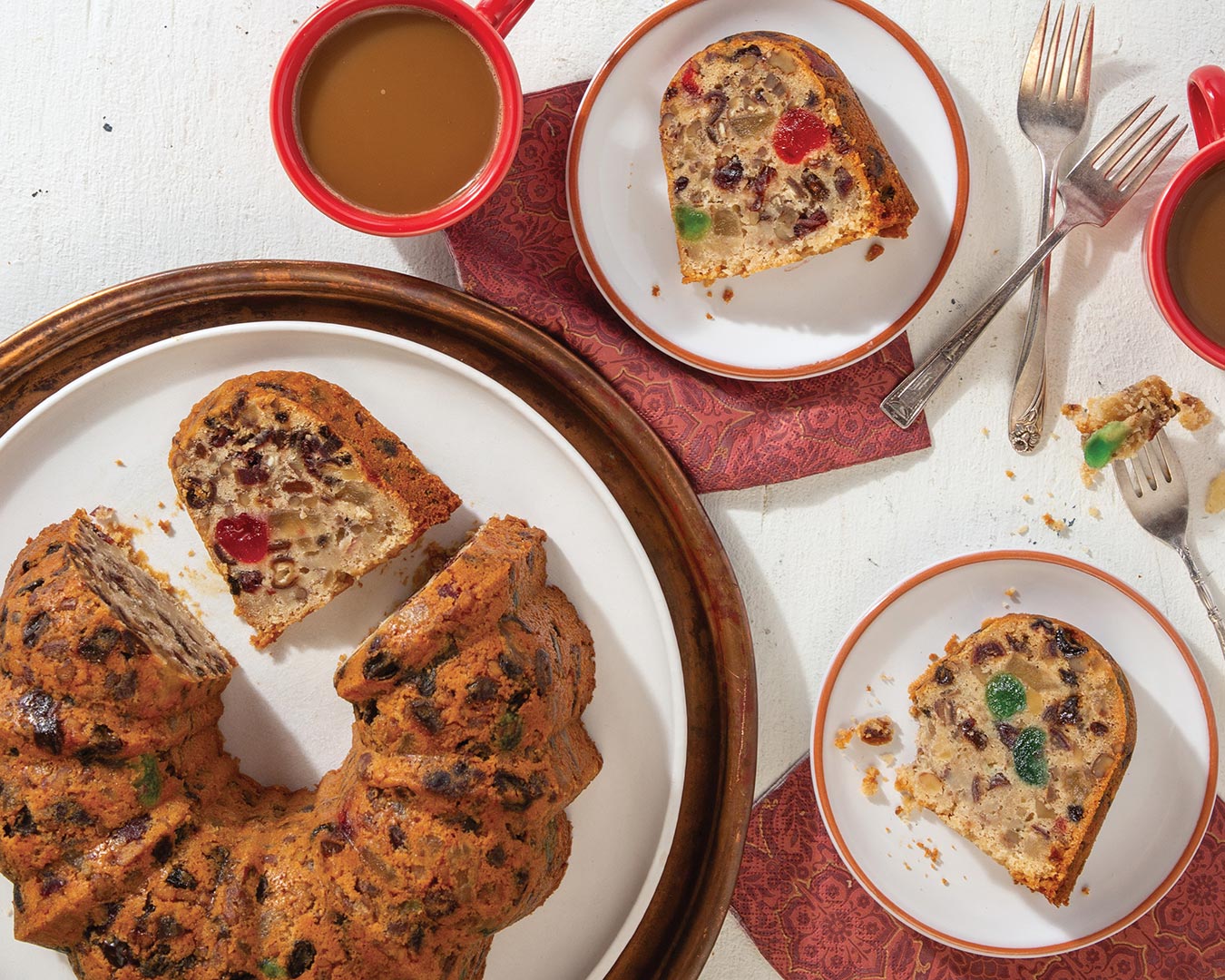
Christians receive the body and blood of Jesus at their worship services; we break bread with family and friends at meals; we give gifts during the Christmas season in the form of cookies, cakes, and breads. My favorite holiday bread—to give or receive—is fruit bread, which you may know as fruitcake.
According to some researchers, fruit bread was first made 2,000 years ago with pomegranate arils, pine nuts, and raisins mixed into barley mash. In the Middle Ages, fruit bread consisted of spices, honey, and fruit preserves. In the 19th century, fruit bread became the traditional wedding cake of England. Fruitcake by any other name is still fruit bread: Italian panettone, German stollen, Bulgarian keks, Mexican three kings bread, Spanish kings cake or Twelfth Night Epiphany bread, Dutch ontbijtkoek, Norwegian Julekake, Czech vánočka, Provence Pompe de Noël, Slovenian potica, Greek Christopsomo or “Christ Bread,” and Romanian cozonac.
My gift to you this Christmas season was actually bequeathed to me from my maternal grandmother: her recipe for Supermoist Fruitcake. Don’t laugh! There is no doubt that this humble yet remarkable dessert will make you wonder why you never tasted such a delicious fruit bread before.
Chef John D. Folse is an entrepreneur with interests ranging from restaurant development to food manufacturing, catering to culinary education. Similar recipes can be found in The Encyclopedia of Cajun & Creole Cuisine (Chef John Folse & Company), coauthored by Michaela D. York.
Find John Folse’s recipe for Mamère’s Supermoist Fruitcake here.