Story and Photography by Pableaux Johnson
In the early hours of Mardi Gras morning, it pays to keep your eyes peeled. In the hours just past dawn, you’re driving through New Orleans’ mostly sleeping streets, car windows down, scanning for telltale signs of Black Masking Indian tribes on the move. Prowling the tight honeycomb of neighborhood streets far from the French Quarter, you hope to see a flash of brightly colored ostrich plumes in your peripheral vision. Maybe you’ll catch other Carnival Day clues—an oversize clutch of cars in a usually quiet residential block, a driving boom of bass drums or full-throated rhythmic chorus of tunes that blend New Orleans’ African cultural backbone with historical homage to Native American culture.
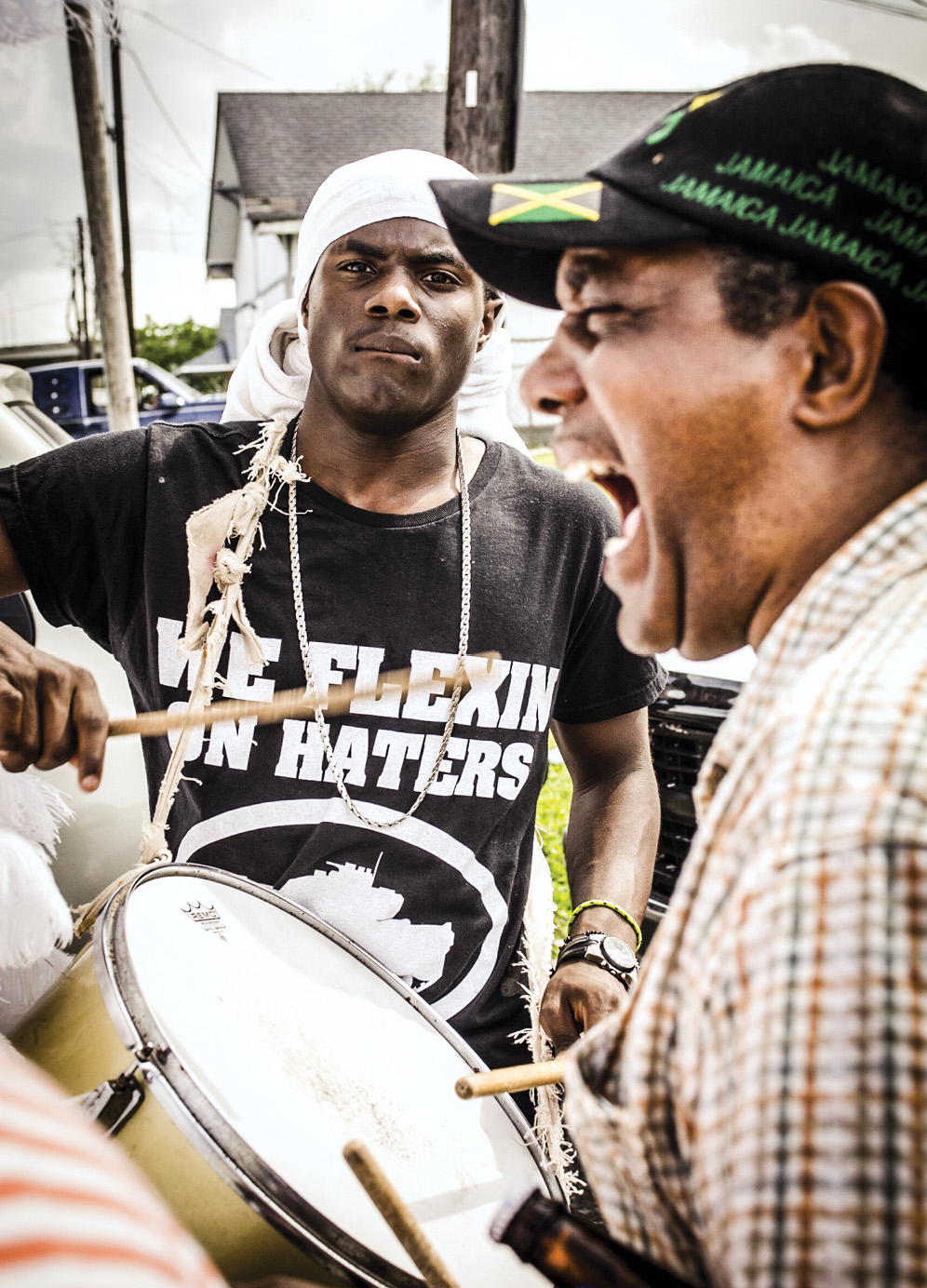
In the pantheon of city-specific Mardi Gras cultures, witnessing the Black Masking Indians requires a little bit of effort on the part of its spectators. Unlike the iconic float parades or more free-form costumed gatherings, “catching the Indians” requires a dedication to the hunt and a working knowledge of the city’s backstreets. There’s no set start time or position, so a little inside cultural knowledge always helps (“The Black Hatchets want to roll early…”), and as always, Mardi Gras luck factors into the equation.
But once you catch the Indians in all their glory, it’s a spectacle that’s likely to rearrange any Carnival-goer’s celebratory priorities.
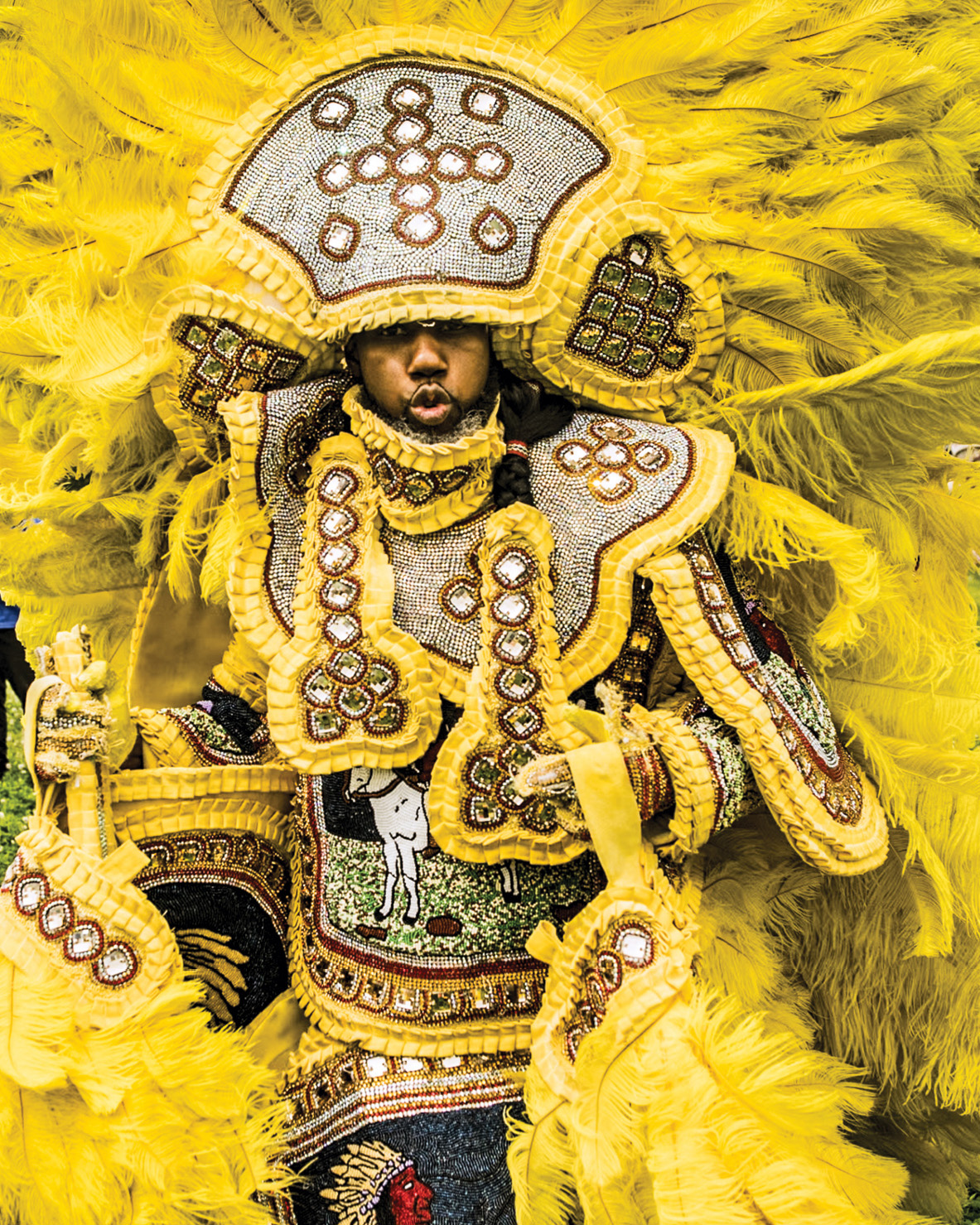
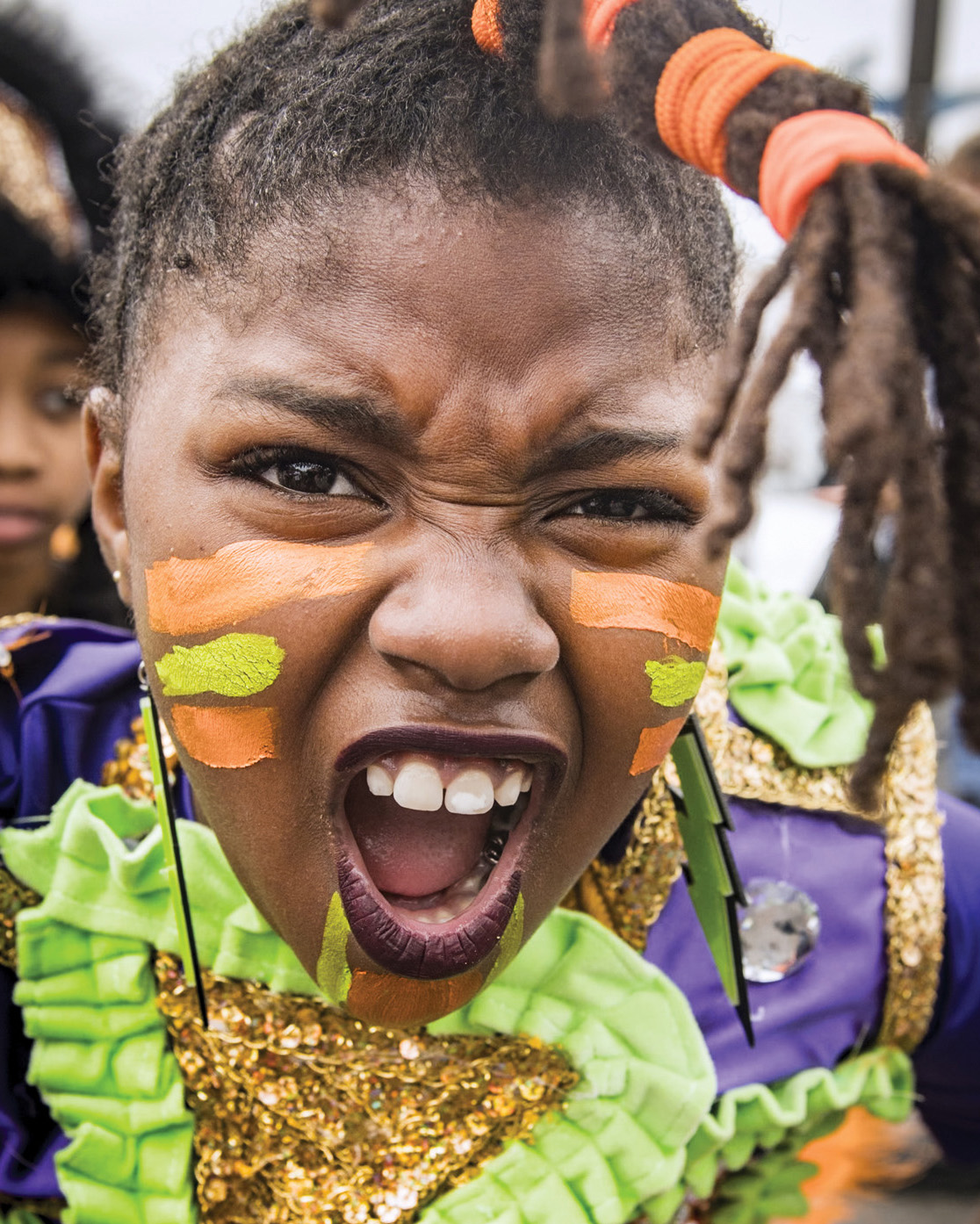
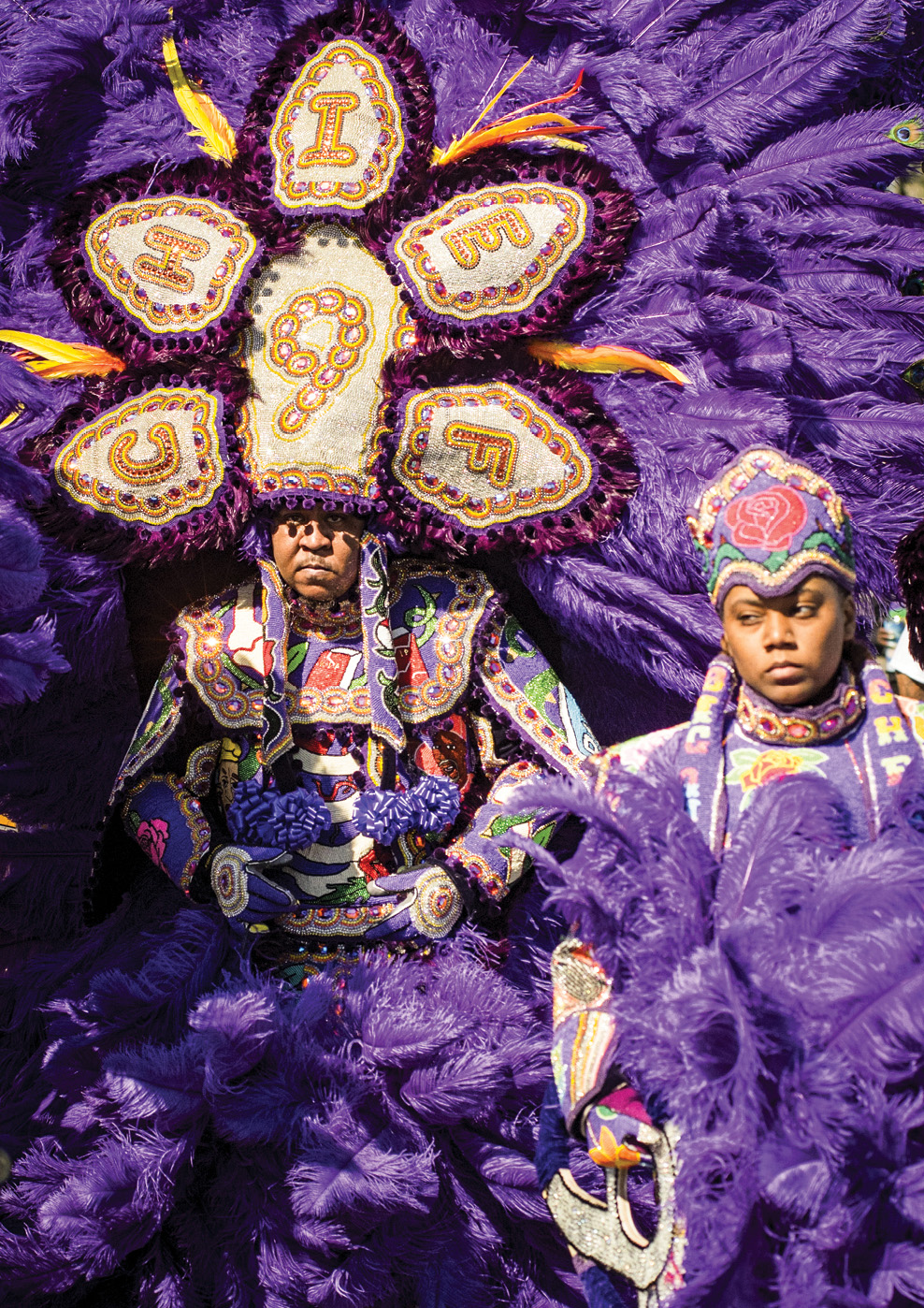
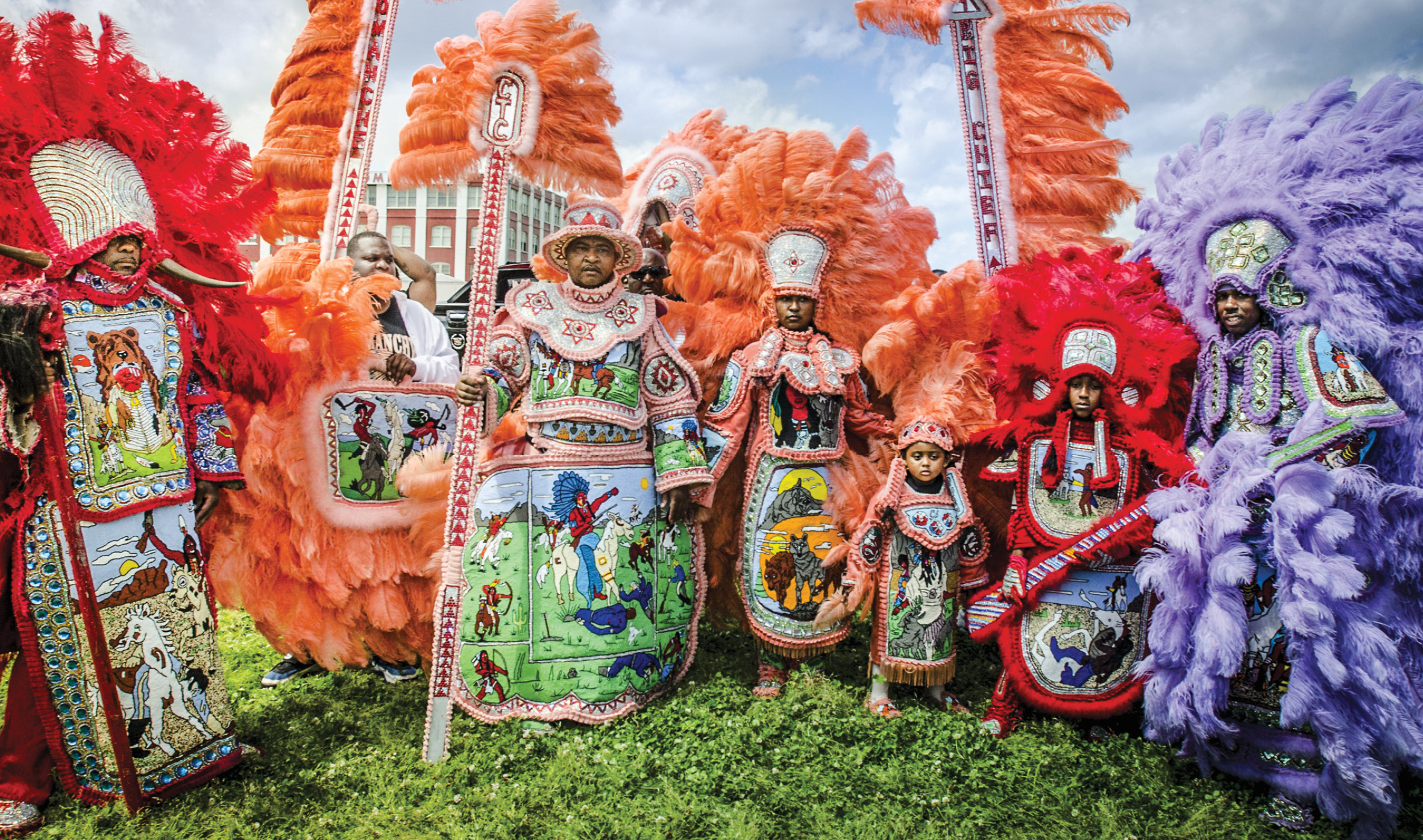
Once you see this amazing visual culture in action—towering “Indian suits” crafted out of flowing technicolor feathers and impossibly intricate beaded panels or sequined three-dimensional structures—and experience the culture’s ritual confrontations at street level, it opens up a new world of Mardi Gras traditions.
According to cultural tradition, the Black Masking Indian “season” starts at dawn on Mardi Gras Day and represents the culmination of a year’s worth of hard work, months of late-night sewing sessions, and seemingly endless hours of nonstop needlework.
Building an Indian suit requires amazing amounts of labor-intensive craft, which makes its lifespan—essentially eight possible in a single year—all the more impressive. Tradition requires that practitioners sew, construct, and take to the street in a “new suit” rather than get multiyear mileage out of one season’s hard work.
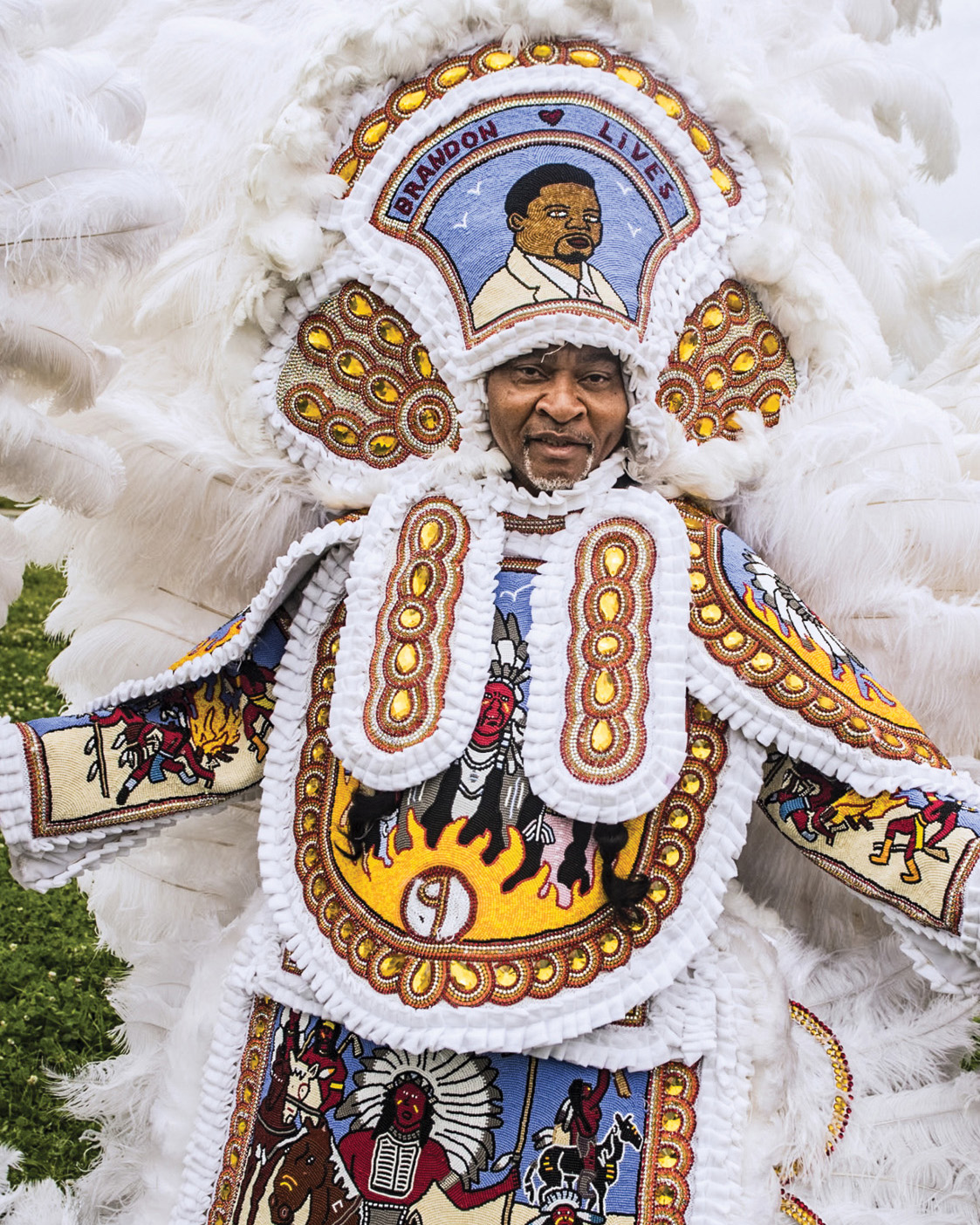
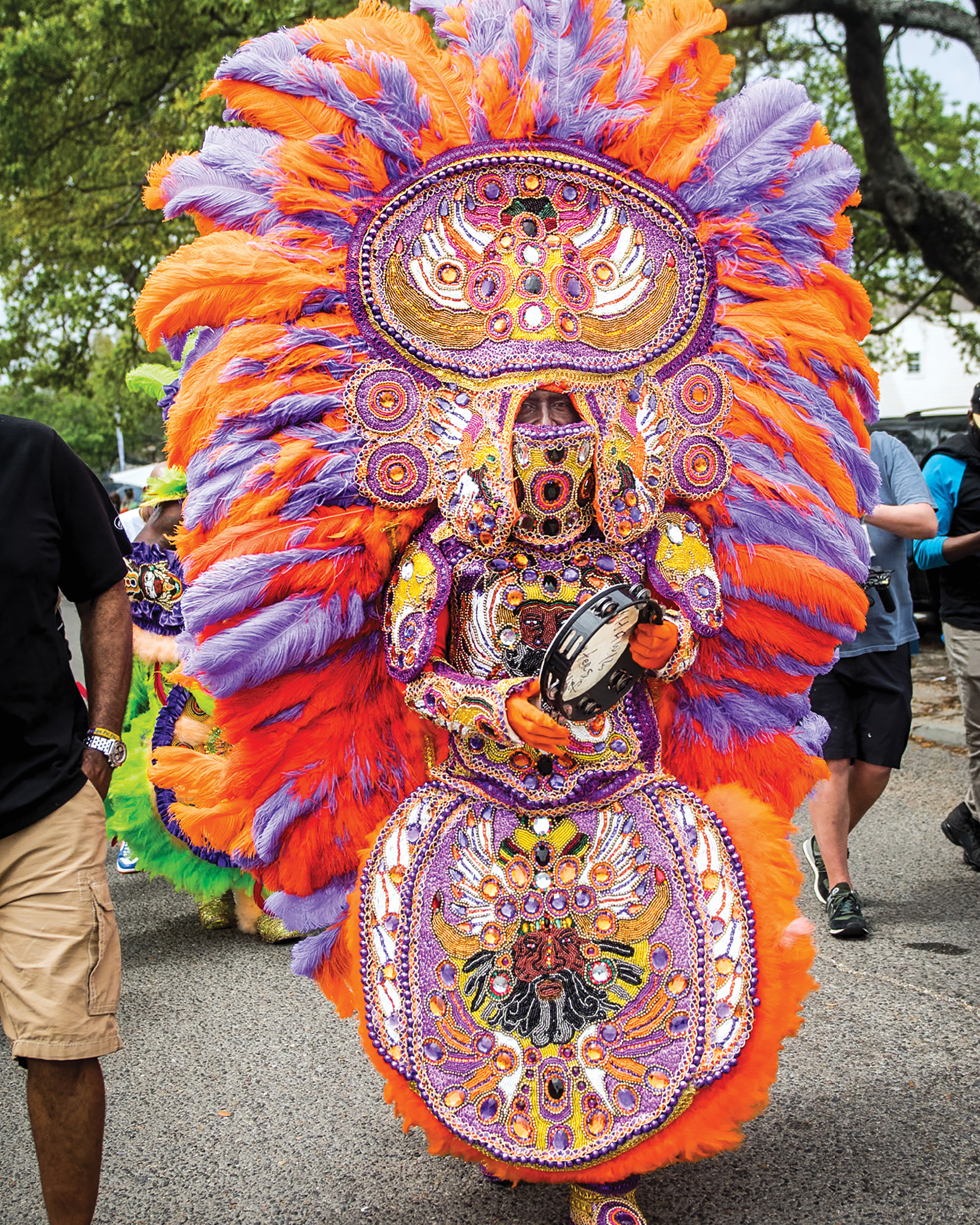
After months of work and investment of time, money, and long-haul creative labor, the hard deadline arrives on Fat Tuesday—needles down, no excuses. The time has come to unveil this year’s suit to your supporters and the other tribes. It’s showtime.
At its core, contemporary Black Masking Indian is an aesthetic competition where the goal in any confrontation is to be prettier than your opponent. The ritual begins as opposing tribes meet each other on the streets and individual Indians confront their equal on the other side in a high-energy competition of traditional dance, braggadocio, and smack talk. (“I’m the Spy Boy they talk about… Lightning-fast and 10 feet tall…”) After a few rounds of back and forth, the opponents show off their suits—the intricacies of beadwork (the smaller, the better), the artistic workmanship, and, as a coup de grâce, a possible hidden patch revealed dramatically to represent theatre and mastery of the craft. After a few minutes in intense challenge mode, they signal respect for the opponent and then move aside for the next pair to face off. On what the traditional songs call “that morning,” it’s time to leave it all on the streets.
Though you can see the Indians later in the springtime at three community gatherings across the city (Super Sunday uptown, Circle of Chiefs downtown, and WestFest across the river), these are lower-key processions where spectators can get close, see multiple tribes in one place, and occasionally pose for pictures. During Jazz Fest, folks might see performing Indians on the Jazz & Heritage Stage or rolling through the Fairground pathways at regular intervals.
But on the two most sacred Indian dates—Mardi Gras Day and St. Joseph’s Night—the individual tribes set their own schedules, routes, and priorities. It’s all about starting the day (or evening) with the drum-driven kickoff hymn “Indian Red” and then rolling out to hunt for other tribes and backstreet face-offs.
May the prettiest Indian win.
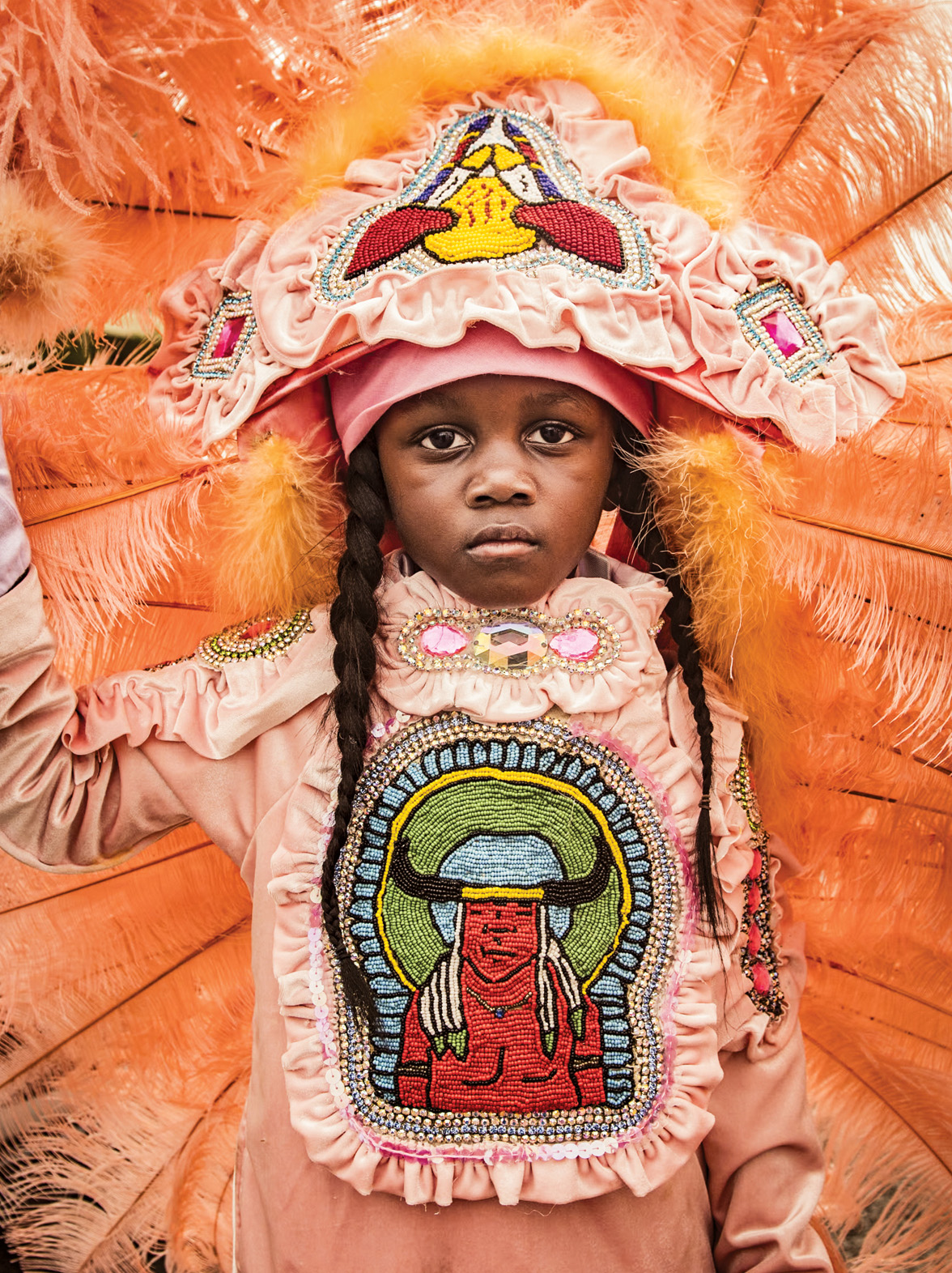
The ceremonial singing of “Indian Red” starts the day by calling out the tribe by position—Spy Boy, Flag Boy, Wildman, Queen, Chief—in a slow chorus with a thunder-drum backbeat, punctuated by sharp tambourine slaps as each Indian shows off specific traditional dance moves, battle shouts, and the layers of their handiwork on this year’s suit.
A rapt crowd—friends, family, and civilians with their ears to the ground—forms a tight ring around the tribe, encouraging each member as they make their high-octane street debut. In the modern era, “Indian Red” gets recorded on ever-present. What used to be secret now hits the world via livestreams.
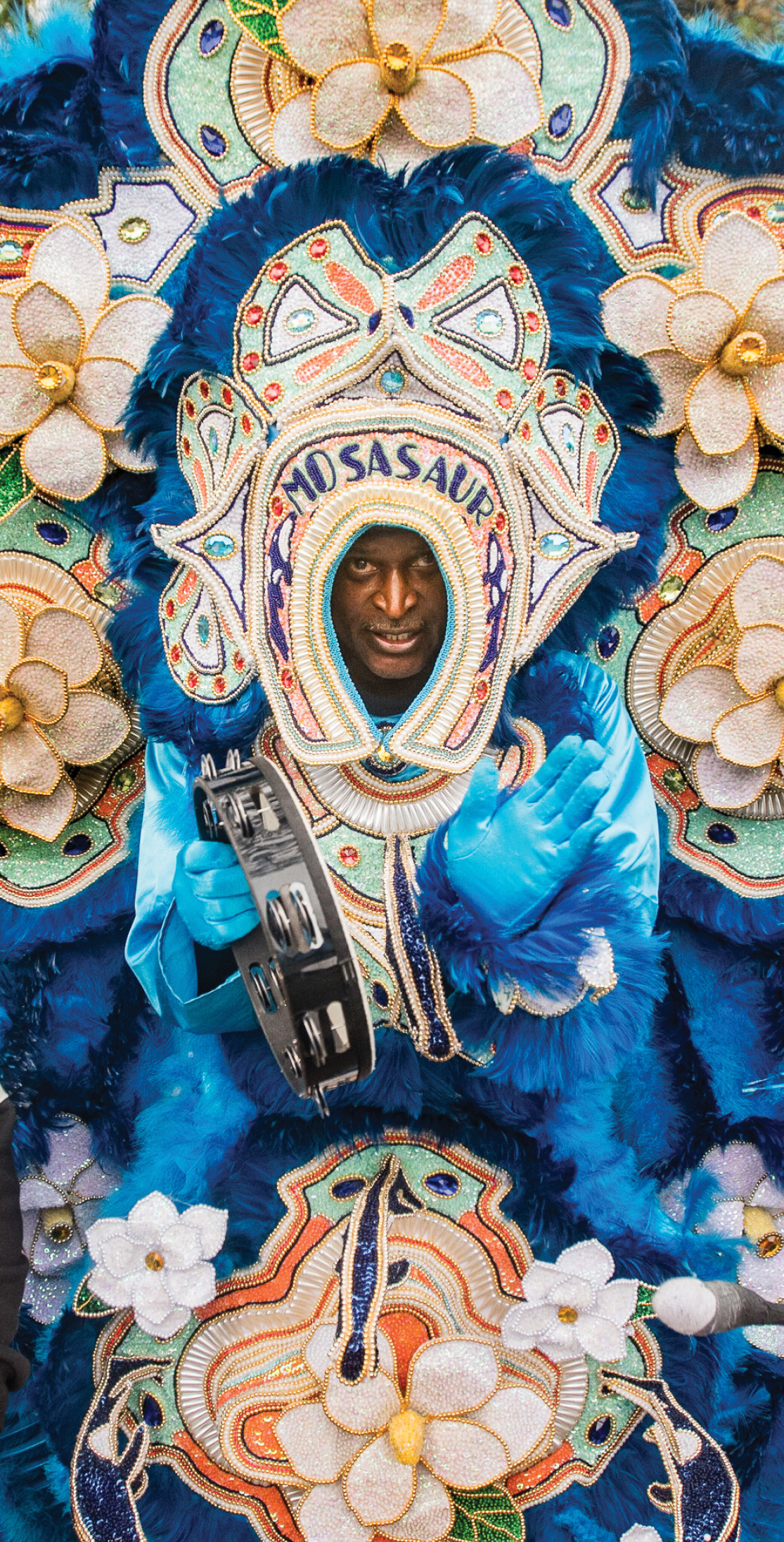
The performative spotlight goes through the ranks and culminates with an homage to the Big Chief, who shows off his suit and, in a much-anticipated move, gives the signal to move as a unit into the day. The drumbeat goes up-tempo, shifts in energy driven by a single lyric shouted by the crowd: “LET’s go GET ’em…”
With suits built for speed and endurance, Spy Boys run ahead of the pack and keep a keen eye out for other tribes in the vicinity. Once they spot feathers on the street, they “throw signals” back to the Flag Boy, who relays the other tribe’s presence and direction to the Chief. The other Indians—Scouts, Wildmen, Queens, and Chiefs—follow the signals and prepare for battle. The drumline, the families, the chanting crowd all roll along into the streets and the soul of a neighborhood Mardi Gras.
And the hunt is on.