Story and Recipes by Marcelle Bienven | Portrait Photography by Jo Vidrine | Food Photography by Katie Graves and Jo Vidrine

began my life’s journey growing up in a small historic town where families were close-knit, and like many of us who ended up in the culinary scene, my memories are steeped with family gatherings that always included food—lots of food.
You could tell what day of the week it was from the aromas wafting from neighborhood kitchens. The fragrance of roasted chicken, rice dressing, seasonal vegetables, and a pie of some kind marked Sunday’s meal. A whiff of spicy seasonings told you boiled shrimp, crawfish, or crabs were on Friday night’s menu. The scent of barbecued chicken emanated from backyards on Saturday afternoons when families gathered to share a meal in the great outdoors. Teenagers in my neighborhood would often ride around on their bikes to visit the kitchen of friends late in the afternoon and decide which meal smelled the best.

My father was one of 12 siblings, and his mother was a classic French cook who was known for her daube glacés, delicate candies, and mile-high coconut cakes. There were two stoves in her kitchen, and they never got cold. At the time, most of the family had their midday meal at the big house on Main Street, where platters of food were shared at two big dining room tables.
My grandfather Lazaire, along with his brother Albert, cofounded the local paper the Weekly Messenger in 1886. The Bienvenu family maintained continuity in leadership with my father, Marcel “Blackie” Bienvenu, in 1935 and in 1982 when my brother, Henri Clay, took over. The paper transitioned from the Weekly Messenger to the Teche News in 1948.
“At the time (in the 1950s), crawfish sold for about 10 cents a pound. (What a bargain!)
—MARCELLE BIENVENU
My maternal grandfather, Adolph, was a sugarcane farmer, and we often had our Sunday meals with our Broussard cousins. My Aunt Grace and her cook, LaVielle (lovingly meaning “the old one” or “the old lady” in French), were masters at cooking for a crowd, implementing items from the barnyard and the large home garden. Baked chicken, sweet potato pone, creamy butter beans, rice and gravy, rice dressing, pork roast, cornbread, cathead biscuits, and pecan pies appeared on the Sunday menu.
My father was a big-time fisherman and hunter. He and my brother, Henri Clay, often brought home mallard ducks, pintail ducks, and specklebelly geese (also referred to as white-fronted geese) from the duck camp in Vermilion Parish.

During the spring months, I would often ride shotgun in his old pickup truck to check out the fishermen coming in from the Atchafalaya Basin with their catches of sacalait, catfish, bream, and freshwater crawfish.
The fishermen who hauled in crawfish kept enough to feed their families and then offered the rest from their ice chests in their trucks parked on the side of the levee. At the time (in the 1950s), crawfish sold for about 10 cents a pound. (What a bargain!)
Like many others of my generation, we ate crawfish every which way—crawfish étouffée, crawfish jambalaya, crawfish cornbread, and crawfish pies. But an unusual idea for the use of crawfish was introduced to me back in the 1990s. The recipe for Crawfish Spring Rolls came to me from Hallman Woods, an incredible gourmet cook from New Iberia, and I always give him due credit since I would have never thought to do this with our crawfish.
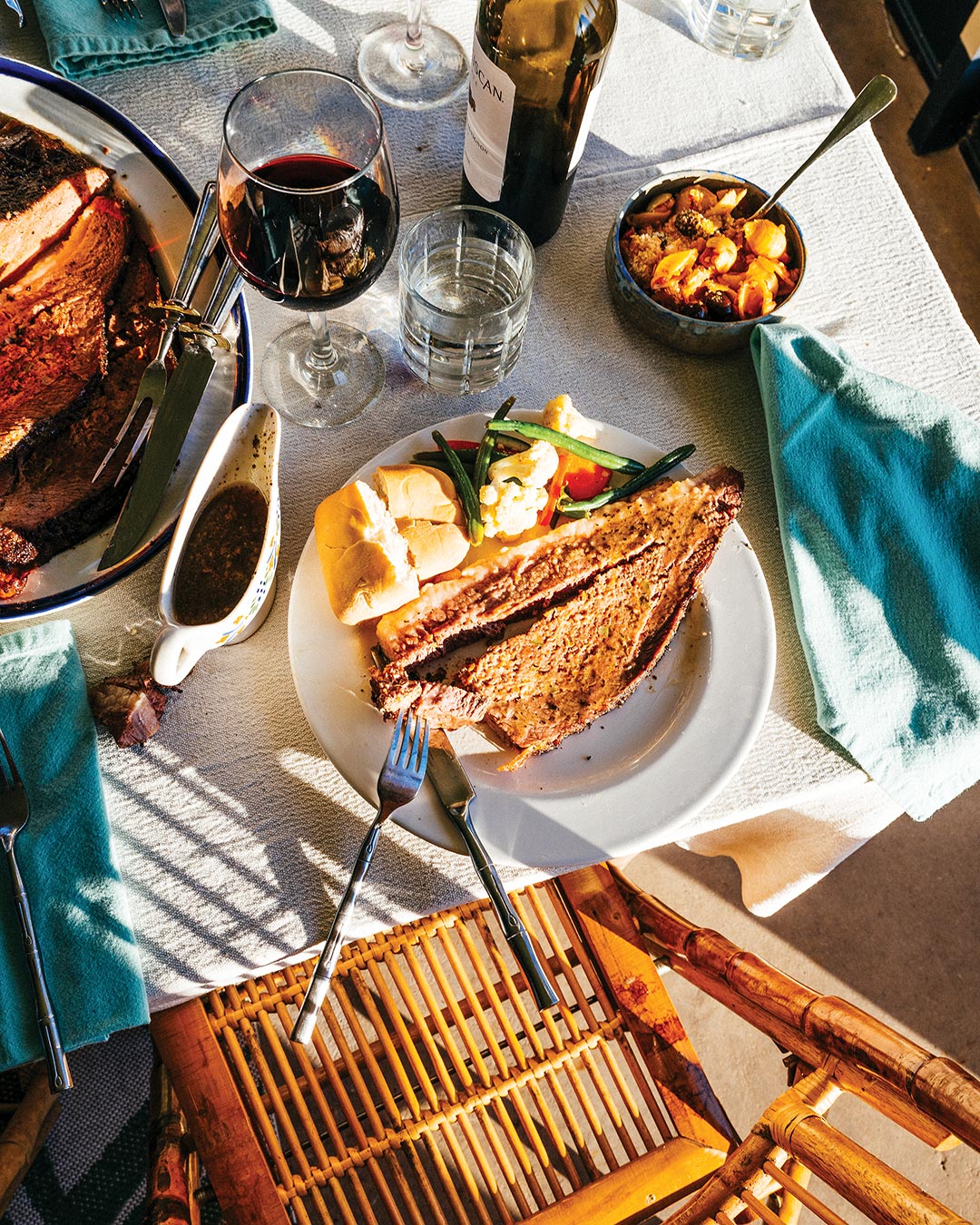

Crawfish Spring Rolls
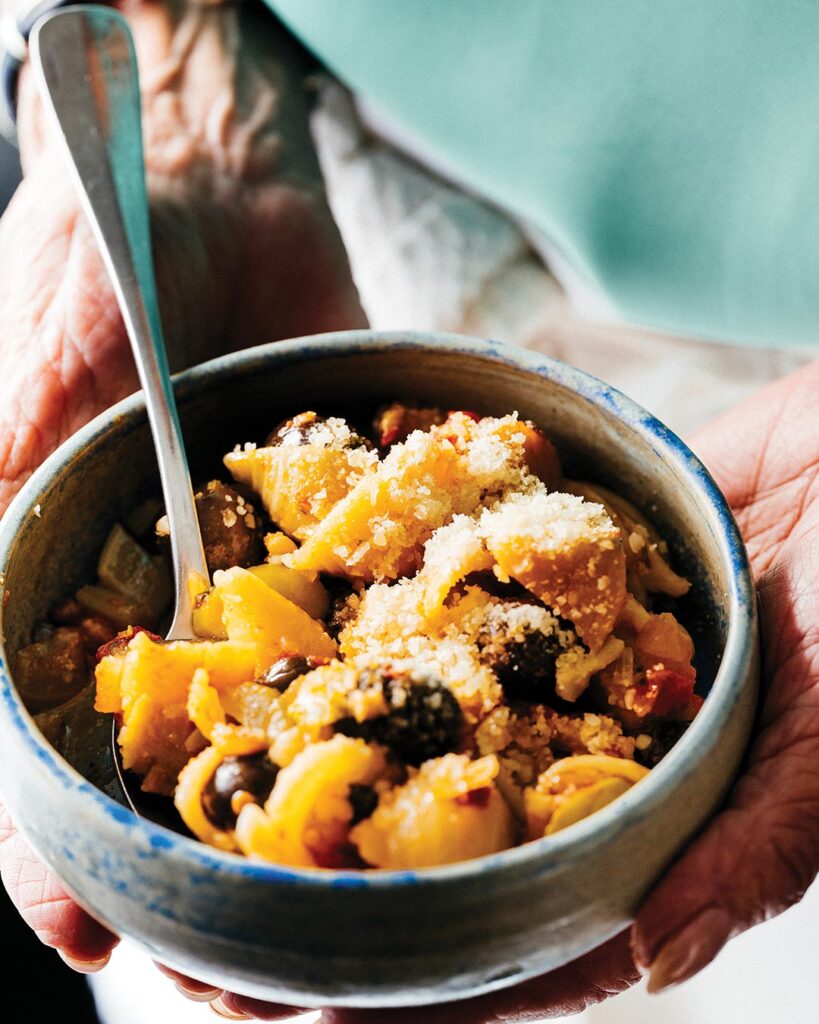
Eggplant Caponata
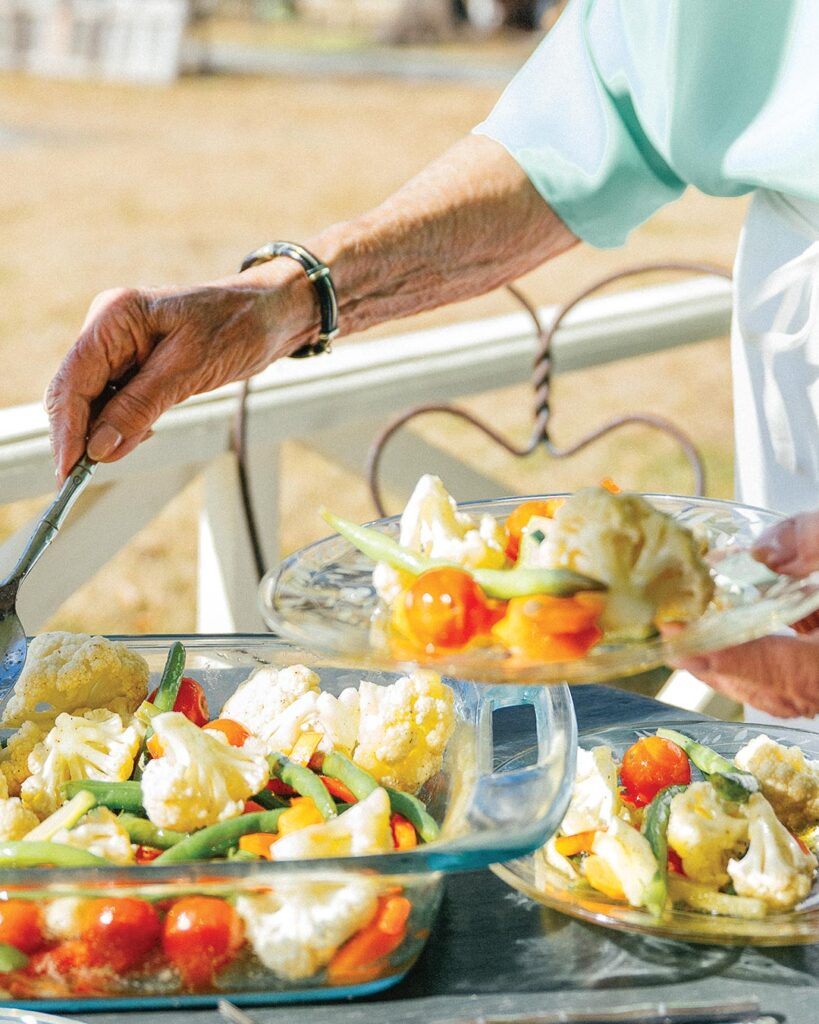
Marinated Mixed Vegetables
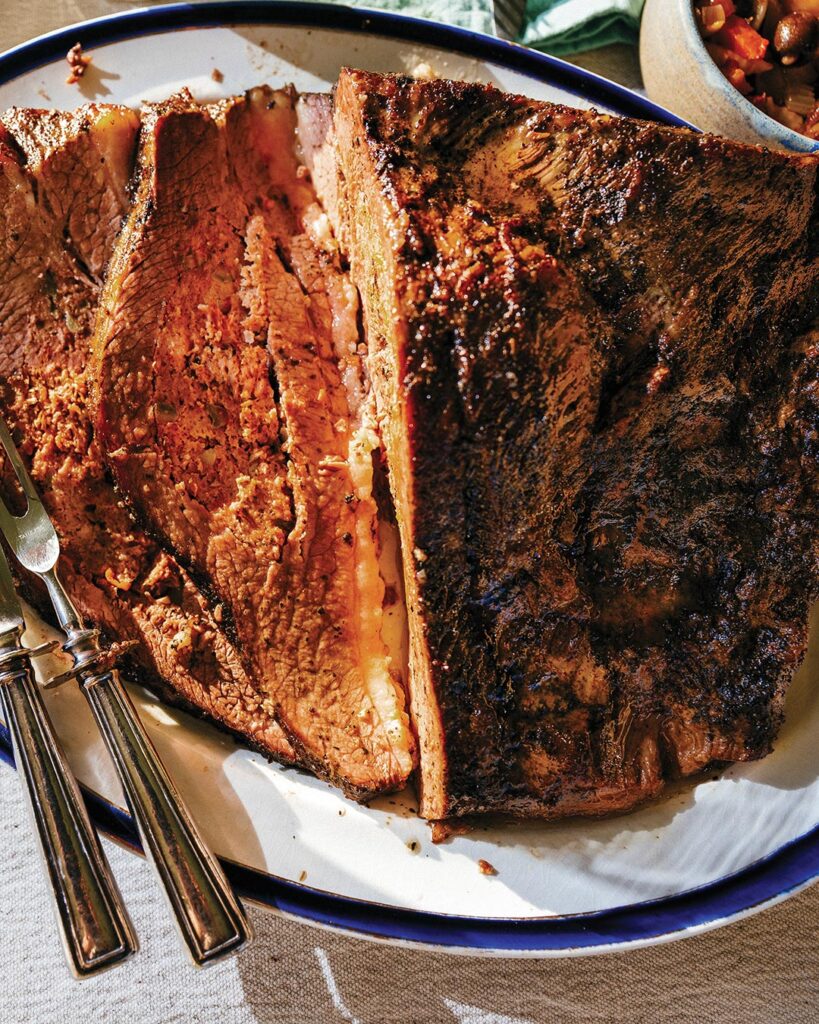
Stuffed Baked Brisket
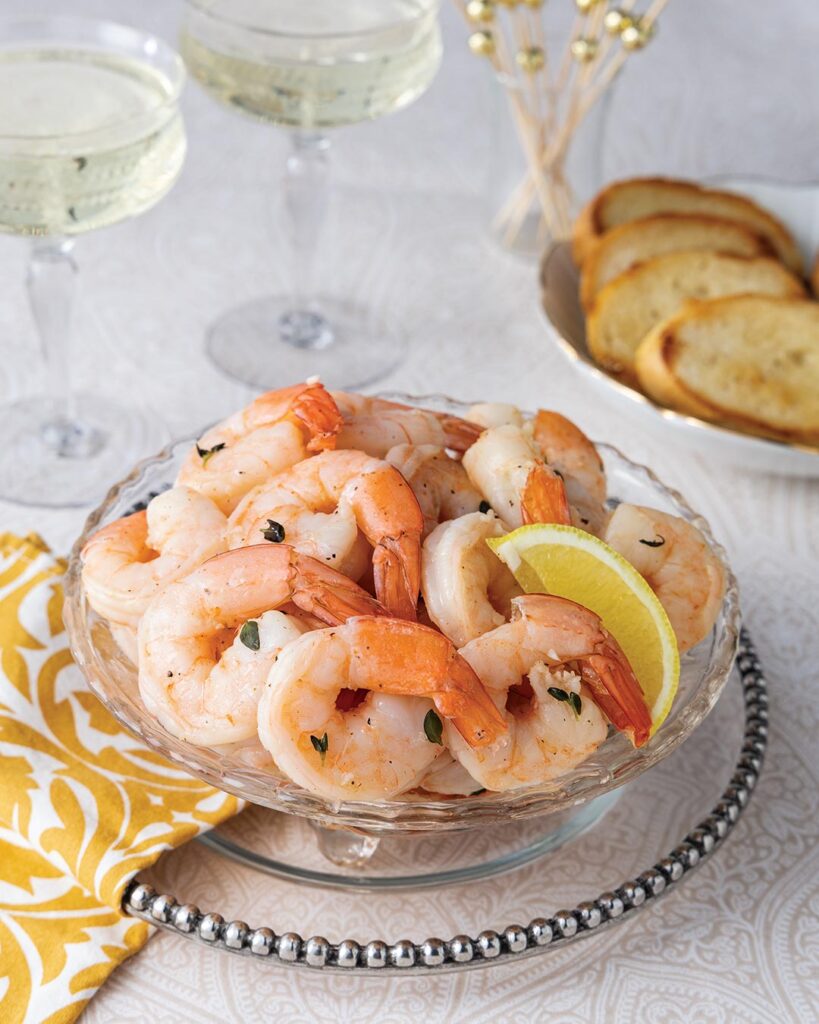
Marinated Shrimp
A Brief History on St. Martinville
St. Martinville, my hometown, may be small, but its noteworthy history makes up for it. It was first the home to the Atakapa-Ishak people, and the area came to be known as Poste des Attakapa, a vital trading post in the mid-1700s. Not long after, in 1765, the exiled Acadians from Nova Scotia arrived and established a “New Acadia,” inspiring Henry Wadsworth Longfellow in 1847 to pen the poem Evangeline, which formed the core of its Cajun identity. The town developed into a diverse cultural melting pot with French, Spanish, Creole, and African influences, attracting refugees after the French Revolution and, later, immigrants, solidifying its rich heritage along the Bayou Teche.
The small town became a cultural hub in the late 1700s during the French Revolution, and it became known as “Le Petit Paris” due to the establishments of an opera house, theaters, and a refined social life.
EVANGELINE OAK
The Evangeline Oak is a historic, iconic live oak tree located on the banks of Bayou Teche in St. Martinville, serving as the landmark for the 1847 poem Evangeline: A Tale of Acadie by Henry Wadsworth Longfellow. It symbolizes the Acadian exile, representing where the character Evangeline waited for her lost lover, Gabriel.
THE ACADIAN MEMORIAL AND MUSEUM
Located a few steps away from the Evangeline Oak, it honors the Acadian (Cajun) people who were deported in the mid-1700s from Acadie (located in the eastern Canadian provinces) and found refuge in Louisiana. A mural depicts the Acadian arrival, and audio stories bring it to life. There is an impressive Wall of Names of the Acadian refugees, a meditation garden, an eternal flame, a Grand-Pré Deportation cross replica, and mosaics of Acadian family coats of arms.
ST. MARTIN DE TOURS CATHOLIC CHURCH
The St. Martin de Tours Catholic Church in St. Martinville is one of the oldest Catholic parishes in the United States and the third-oldest in Louisiana, founded in 1765 by Acadian exiles. Known as the Mother Church of the Acadians, the current structure was completed in 1840, dedicated in 1844, and is located in the center of historic Acadiana.
THE LOUISIANA-EVANGELINE STATE HISTORIC SITE
The Louisiana-Evangeline State Historic Site is the primary state park in St. Martinville, established in 1934 as Louisiana’s first state park. It commemorates Acadian/Creole culture along Bayou Teche, featuring the historic Maison Olivier (c. 1815), a blacksmith shop, and Acadian craft exhibits.